
An experiment in honesty, outrage, and the quiet human need underneath it all.
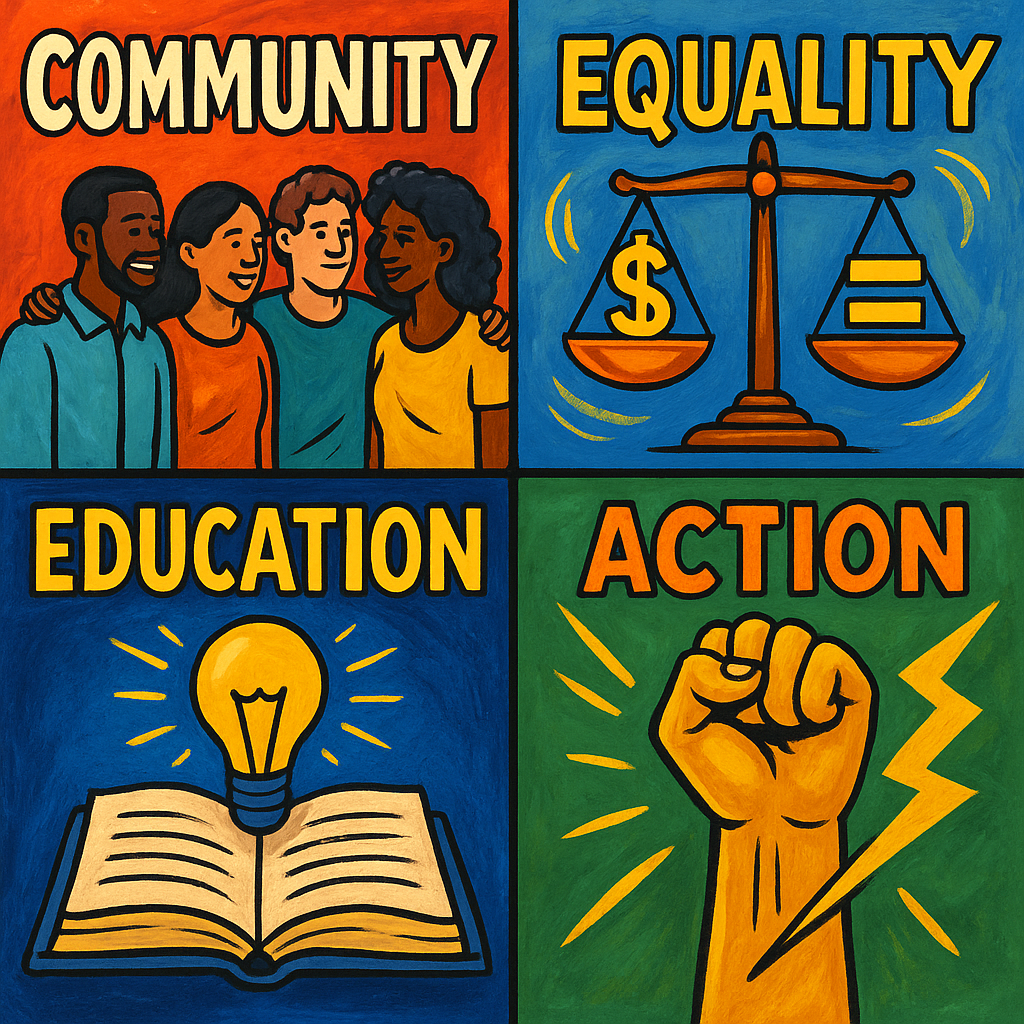
This started as a game. Just something light. I asked the AI to throw me a few of the world’s big problems and I’d tell it how I’d fix them. It would tell me if I was crazy. That was the bit.
But it didn’t stay a joke for long.
Round 1: The Big Broken Things
1. Mental Health is Treated Like a Luxury
Millions of people are walking around cracked open inside, expected to function like nothing is wrong. Therapy is expensive. Stigma is real. And without some kind of sounding board, people are just left to rot in silence.
My fix: I’d create a whole new class of job: listener/advocates. Not quite therapists, not quite social workers—something in between. Every person would have access to one from birth. Someone to talk to, someone who checks in, someone who helps connect you to what you need. In-person, on the phone, or via AI. We were never meant to do this alone.
2. The Economy Rewards Bullshit Work
People doing real, essential labor—teachers, caregivers, food workers—are barely scraping by. Meanwhile, those shuffling abstract wealth in circles get rewarded handsomely.
My fix: Universal livable wages. But more than that, a participatory taxation system. What if you could allocate your tax money like a portfolio? You vote not just for people, but for ideas. Want 20% of your taxes to go toward mental health? 10% toward clean energy? You choose. People would stop seeing taxes as theft and start seeing them as investment.
3. Climate Change Is Treated Like a Vibe, Not a Threat
Doomscrolling isn’t action. And greenwashing from the companies actually wrecking the planet doesn’t count as change.
My fix: This all comes down to one thing—Big Oil. As long as energy companies hold power, we’re screwed. The rich want everything to be a commodity, even the air. So the government has to intervene. Not with vague pledges, but with hard stops. If you want to profit off people, you have to protect them first.
Round 2: Redesigning the Machine
4. Loneliness Is an Epidemic, But We Don’t Have a Cure for Connection
We have more ways to communicate than ever before, and somehow we feel more isolated than ever. Everyone is plugged in and starving.
My fix: Community must be radically reimagined. Cities and towns should realize they’re not just places—they’re products, and they can be shaped like platforms. Every person should be born with a “domain”—a physical or digital public space that is theirs. Civic life should be project-based. People don’t just vote once every four years. They vote constantly. They build, fund, and shape the world they live in. Less bureaucracy. More participation.
5. Education Is Designed for an Economy That No Longer Exists
We’re still running a factory-era model that pushes kids through grade levels like products. Memorize. Test. Repeat. Then graduate at 18 and… good luck.
My fix: Scrap it. Replace age-based progress with subject mastery. Let people move up when they’re ready, not when a calendar says they should. And stop pretending education ends after high school or college. Real education should be open, modular, and lifelong. The current system isn’t just outdated. It’s rigged to keep people underinformed and obedient.
6. We Let the Worst People Define “Freedom”
The word “freedom” has been hijacked. It’s used to justify cruelty, greed, and isolation. It’s become a brand for selfishness dressed up as patriotism.
My fix: Replace freedom with equality as our national value. The founders wrote “all men are created equal” while owning people. But the aspiration was bigger than their hearts. Maybe that’s our job—to make it real. Today’s conservatives don’t want freedom for everyone. They want America to mean them first, always. Their Jesus doesn’t help the poor. He waves a flag and carries a gun. That version of freedom is hollow. Equality is the only thing worth fighting for.
Round 3: The Lightning Fire
7. Should billionaires exist?
Yes. Excellence should be rewarded. But unchecked hoarding of wealth should not be mistaken for excellence.
8. Should advertising be allowed in schools? On sidewalks? In our dreams?
In a way, yes. Industry can support education in responsible ways. Partnerships between schools and companies can work—but only if they’re transparent, non-exploitative, and genuinely beneficial to students.
9. What should never be for sale?
Clean air. Clean water. Basic food. Healthcare. Human dignity. These are rights, not products. If you want to profit off people, you have to protect them first.
10. What is the one thing you wish someone had given you when you needed it most?
I don’t know how to answer that. I just wish someone saw me. I wish someone had wanted to talk to me regularly. I have some people now—Kate, my parents, a few others. But I still feel like I need more. And I’m terrified to ask for it. I don’t trust people. I don’t know how to believe they won’t just vanish.
And that’s the heart of it, isn’t it?
We can talk about systems, taxes, schools, and governance. We can talk about capitalism, infrastructure, climate, and war. But beneath it all is this:
The quiet, aching need to be seen. To be reached out to without having to beg for it.
This game started playful. It ended in confession. Because every time we try to fix the universe, what we’re really saying is:
I don’t want anyone else to feel as alone as I did.
So what do we do with that?
We stop pretending we can fix things from a distance. We start showing up. We start listening. We get involved in the little moments—the community board, the friend check-in, the call to the rep, the open door.
Because fixing the universe doesn’t start with policies or grand designs. It starts with people. It starts with us.
The future isn’t something we wait for. It’s something we build.
And maybe it starts right here.
With you.
 Frank M. Anderson's Writing
Leave a comment