
By a Former Teacher, Present Writer, and Longtime Observer of a Fractured System
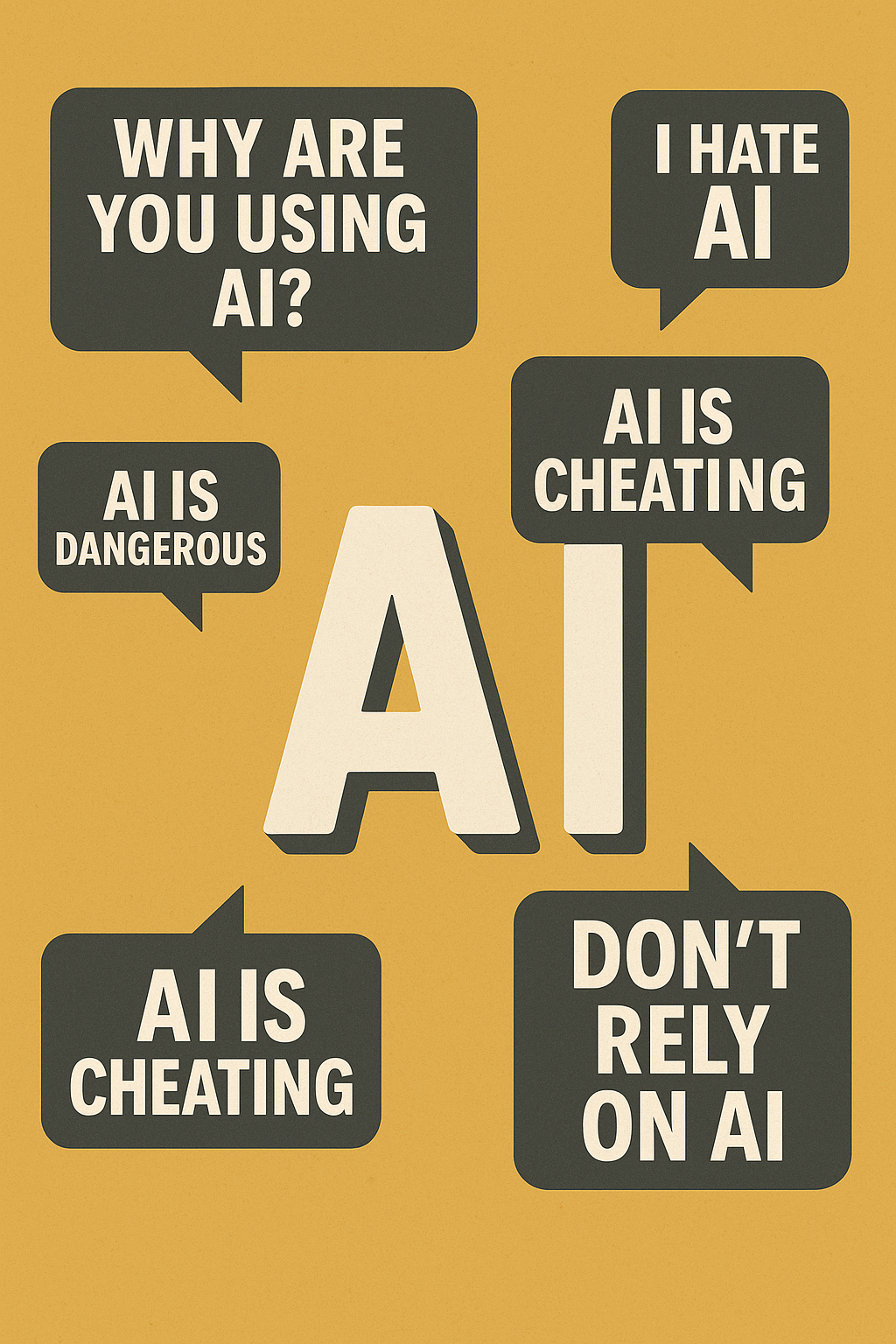
I’ve willingly embraced AI in my creative work. Some might call that selling out—but for me, it was a choice built on trust, collaboration, and survival. This technology doesn’t replace my voice; it helps me refine it. I’ve never been more productive, more honest, or more proud of what I’m building.
But let’s not pretend there isn’t something unsettling under the hood.
These models were trained, in part, on massive troves of human work—scraped from the internet without permission. I know that. And yes, I feel a little gross about it. But I also feel gross about how the world has functioned long before AI ever showed up.
We live in a system where everything is monetized and nothing is sacred.
Where billionaires hoard “vision” while teachers buy supplies out of pocket.
Where the powerful write rules for others, and the rest of us fight over crumbs.
It’s dog-eat-dog, and it’s getting worse.
The pendulum has swung too far into “you’re on your own.”
And the most vulnerable are paying the price.
I used to be a teacher.
And I saw the cracks up close.
Let me say this clearly: the system does not work.
Not for all kids. Not even for most.
These days, whenever I hear a political debate, I ask one question:
How does this affect kids?
And I don’t mean just the kids with stable homes and nice shoes.
I mean the ones born into addiction.
The ones with no safe place to sleep.
The ones labeled “trouble” before they ever had a chance.
Our schools are overwhelmed. Teachers are exhausted.
We know a one-size-fits-all model doesn’t work, and we’ve done nothing to fix it.
So when I think about AI in education, I don’t see a threat.
I see hope.
Imagine a kid—traumatized, struggling—getting a personalized tutor who never gets tired, never judges, and adapts to their pace. Imagine teachers freed from busywork so they can actually connect and care. Imagine technology and humanity working hand in hand.
But here’s the kicker:
None of that matters if the kid is hungry, scared, or broken.
You can’t automate empathy. You can’t code away poverty.
Maslow’s hierarchy still applies.
And right now, we are tearing down the very base of it—gutting food assistance, demonizing mental healthcare, vilifying support systems.
I’m not just a teacher or a writer.
I’m someone living with bipolar disorder.
I’ve seen what this world does to people who fall outside the norm.
And I’ve watched it punish people simply for being vulnerable.
Entertainment is broken.
Education is broken.
Politics? Don’t get me started.
The AI debate is just a new mask for the same old question:
What kind of future are we building?
We’re in radical times, and that scares those in power. But deep down, we all feel it—something is coming. A breaking point.
It’s tempting to reduce everything to “good vs evil.”
But not everything that looks evil is.
And not everything labeled good serves the good.
Let me put it simply:
- If you do things well, you should be rewarded.
- If you’re doing things poorly, you deserve support to get better.
- If you can’t do a particular thing well, you deserve help finding out what you can do well.
- If you’re a harmful influence on others—if you break the rules or hurt people—you deserve proportionate consequences and a real shot at improvement.
- If you try to be a positive, contributing member of society, you deserve a basic standard of living.
That last point is huge.
What is a basic standard of living today?
It’s more than a roof and a meal. It’s the floor a decent society builds so people can stand up on it.
Here’s what I believe:
If you do around 40 hours a week of honest, useful work—whether that’s teaching, digging ditches, flipping burgers, caregiving, cleaning, coding, creating—anything that gives back in some way—you deserve:
- Safe shelter
- Nutritious food
- Access to healthcare
- Opportunities to grow
- Community support
This isn’t socialism or capitalism. This is humanism.
A simple social contract: You show up, and we show up for you.
Our politics have become theater.
Wedge issues are used to distract and divide.
The extreme right tells you to hate the poor.
The extreme left wants you fighting over pronouns in a burning building.
Meanwhile, the same bad actors stay in power.
I’ve cut out the most extreme conservatives in my life.
And, frankly, some extreme liberals too.
Because it’s not about parties anymore.
It’s about this one question:
Do you believe people deserve a second chance—and support if they can’t help themselves?
Because if not, what are we even doing?
This isn’t about “Billy Bob and his fifteenth trip to jail.”
It’s about Billy Bob’s kid—a child who didn’t ask for any of this.
A child who deserves more than being discarded because of someone else’s failure.
And to those who scream about being “pro-life” while cheering war, poverty, and punishment?
Spare me.
I’m not religious, but I’ve read what Jesus actually said and did.
And I don’t see it reflected in the loudest voices claiming to represent him.
So yeah. I’ve got a complicated seat at this table.
I use AI. I believe in second chances. I want a world where everyone has the tools to survive, heal, and maybe even thrive.
This isn’t about being right.
It’s about being real.
We can build something better.
But only if we stop pretending the system isn’t broken—and start asking who we’re building the future for.
Let’s make damn sure it’s not just the winners of the last war.
Let’s make it for the kids.
Let’s make it for the ones still trying.
Let’s make it for each other.
 Frank M. Anderson's Writing
Leave a comment