
By Frank M. Anderson
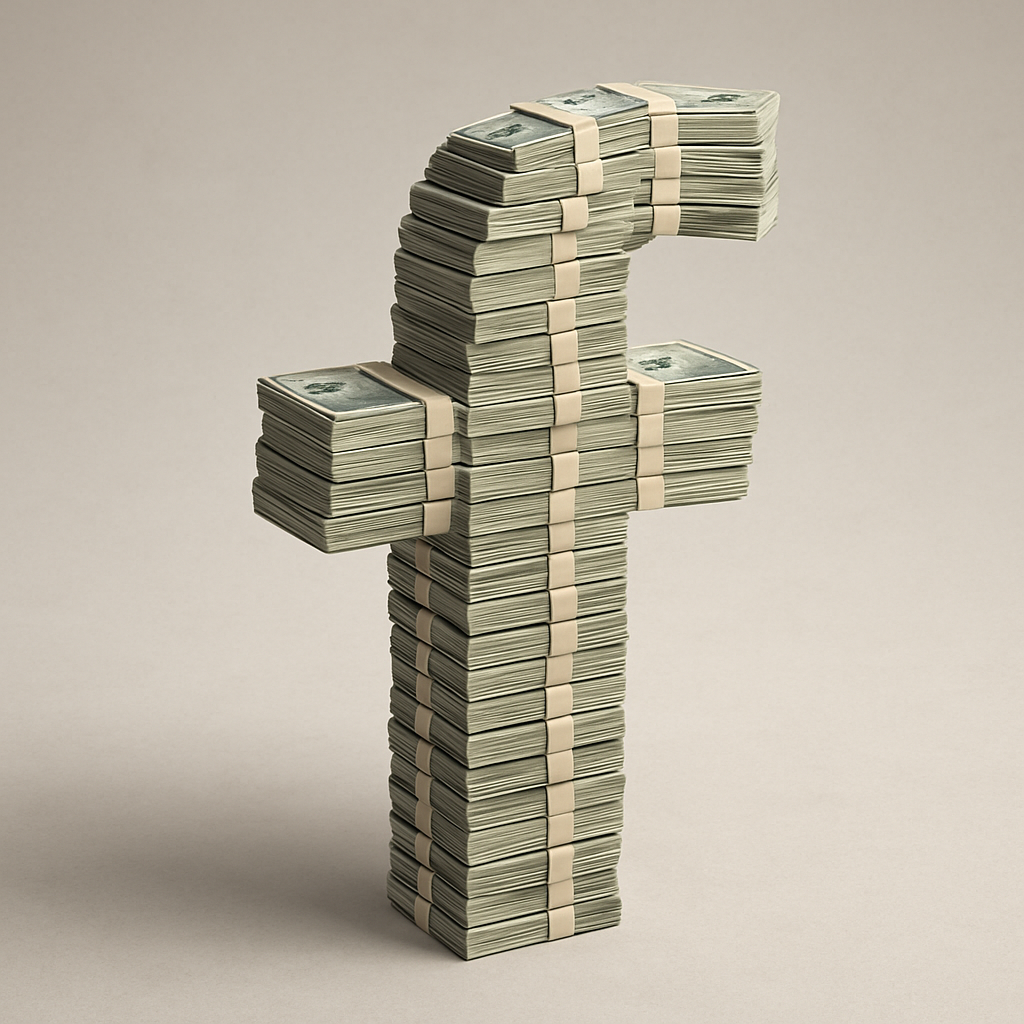
Let’s start with the obvious:
Facebook is broken.
Not technically—functionally. Morally. Spiritually.
It’s a platform that once promised connection but now delivers manipulation, outrage, and infinite scrolls through curated distraction.
And yet, I don’t think it’s beyond saving.
In fact, I still believe in Facebook.
At its best, it works. I check in on old friends. I see photos of new babies and shared grief. I read words that move me, catch up with people I care about, and post things that matter to me. For many, it’s still the only social lifeline they have.
But it’s not what it could be.
And it hasn’t been for a long time.
The Lie of “Free”
Facebook’s original sin wasn’t the News Feed. It wasn’t even the algorithm.
It was the promise that all of this could be free.
Because nothing is free.
If we’re not paying with money, we’re paying with attention. With privacy. With our trust.
And if Facebook’s entire profit model is based on keeping us glued to the screen, it’s always going to favor outrage over nuance, addiction over authenticity.
That’s how we got here:
- A feed that shows us less of what we want and more of what keeps us agitated.
- Creators who have to “play the game” just to reach their own audience.
- Users trapped in a doom loop of suggested content, misinformation, and performative rage.
- An algorithm that amplifies division because unity doesn’t generate clicks.
And now?
Instead of acknowledging its role as one of the most powerful cultural forces on Earth, Facebook is courting reactionary politics to protect its interests—flirting with authoritarianism under the guise of neutrality.
We Keep Saying “It’s Just a Platform.” It’s Not.
Facebook is no longer a website. It’s infrastructure.
It shapes elections. It builds (and breaks) communities. It defines public discourse. It’s where many of us live a significant portion of our emotional and social lives.
If that’s not a civic institution, what is?
And yet, we’ve asked nothing of it—other than to keep being “free.”
We’ve let profit and power run unchecked, while pretending morality lives in a separate box. We say, “It’s just business,” while letting that business shape our world.
So What Now? What If There’s Another Way?
Let me be clear:
I don’t want Facebook to collapse.
I want it to grow up.
I want it to stop pretending it can be both the lifeblood of democracy and a content casino with no accountability.
And I want to propose a way forward that still allows for profit—but ties it to purpose.
Here’s what that could look like:
1. Paid Tiers That Enhance Trust and Control
Let Facebook stay “free” at the surface level. But for users who want real control, offer a premium tier.
- Chronological Feed Access – $3–5/month for an unfiltered timeline. No ads. No manipulation.
- Data Privacy Mode – Pay to opt out of tracking. Think iCloud+ for your social life.
- Supporter Features – Micro-donations to creators, small businesses, or causes you care about.
If we want something meaningful, we should be willing to invest in it.
If Facebook offers that meaning, it deserves to profit.
2. Ethical Monetization for Creators
Right now, creators are stuck hoping the algorithm notices them. That’s not sustainable.
Let’s flip the model:
- One-click tipping on posts that move you.
- Micro-subscriptions for artists, writers, educators, and organizers.
- Collaborative tools for building paid groups, projects, and events.
Facebook could take a small, fair cut—and become a platform where creative work is valued, not exploited.
3. Bring Back the Power of Community
Facebook Groups were once its best feature. Now they’re flooded, hard to moderate, and difficult to grow. Fix that.
- Add premium tools for moderators: analytics, scheduling, AI-assisted filtering.
- Offer verified, safe spaces for vulnerable communities and civic orgs.
- Support local-first features: neighborhood feeds, mutual aid, shared events.
People still want to belong. Let Facebook be the place where real belonging happens.
4. Civic Mode for Civic Moments
A platform this powerful can’t pretend elections and emergencies are just “regular days.” Add a toggleable Civic Mode:
- Temporarily limits algorithmic virality.
- Prioritizes local news, fact-checked info, and voter resources.
- Removes recommendation pipelines from inflammatory content.
This isn’t censorship. It’s contextual design.
You can still say what you want—but the system won’t shove it down everyone’s throat during a fragile moment.
5. Reinvest in Human Moderation
AI moderation is cost-effective, but it’s deeply flawed.
Facebook needs to hire, train, and empower real humans—especially for nuanced topics, mental health content, or culturally sensitive material.
If we want a humane digital world, we can’t keep outsourcing judgment to keyword bots.
So Why Would Facebook Resist These Changes?
If these ideas are so doable, so ethical, and even profitable, why hasn’t Facebook done them already?
It comes down to five things: profit addiction, cultural inertia, fear of loss, complexity, and accountability.
1. The Profit Addiction
Facebook is optimized for maximum engagement at minimal cost. That means outrage, automation, and endless scroll. Nuance doesn’t scale—and scale is the only thing Wall Street rewards.
2. Cultural Inertia
The company was built by hackers and disruptors—not stewards. Changing direction would require confronting its own founding values. That’s not just a tech shift—it’s an identity crisis.
3. Fear of Losing Control
If users gain true control—if they see what they want, not what the algorithm feeds them—Facebook risks losing the one thing it can’t replace: its grip on attention.
4. Complexity and Cost
Human moderation is expensive. Ethical design slows down the dev cycle. Offering real transparency opens the door to scrutiny. It’s easier to optimize for what’s cheap and fast.
5. Accountability Sets Precedents
If Facebook admits civic responsibility, it opens itself to regulation, legal scrutiny, and a new set of public expectations. And that terrifies it more than anything else.
But here’s the truth:
Resistance doesn’t mean these ideas are wrong. It means they matter.
6. Profit, Yes—But Tie It to Purpose
So here’s the final piece: if Facebook does commit to true civic responsibility—if it becomes a platform that protects truth, fosters creativity, and promotes healthy connection—then yes, maybe it should be rewarded.
- Tax breaks for ethical monetization tools
- Incentives for transparency in moderation and data use
- Partnerships with civic groups, educators, and researchers
- Recognition as infrastructure that supports—not erodes—democracy
This isn’t about handing them a blank check. It’s about saying: if you act like public infrastructure, maybe we treat you like it—after you prove you’ve earned it.
We do it for energy. We do it for education. Why not for the digital spaces we live in every day?
Responsibility Deserves Reward
We can’t keep demanding better from tech platforms while refusing to build an ecosystem that supports better behavior.
We can’t demand that Facebook grow up—and then punish it when it does.
No, we shouldn’t hand out benefits for doing the bare minimum.
But if a platform takes bold, meaningful steps to prioritize people over profit, we should meet that with something real—because otherwise, what incentive do they ever have to change?
The Future We Build Is the One We Pay For
If we want meaningful social media, we can’t keep pretending it’s free.
If we want ethical platforms, we can’t just complain—we have to reward boldness.
If we want people-first design, we have to put people first in policy, in economics, and in the way we think about our digital lives.
Facebook still has the reach.
It still has the infrastructure.
It could still be the place we come to connect, heal, learn, laugh, and share real things.
But only if it wants to be.
And only if we demand it.
Let’s stop accepting crumbs.
Let’s stop pretending algorithms are neutral.
Let’s stop settling for a broken version of what this platform could be.
It’s not too late to fix it.
But it won’t fix itself.
 Frank M. Anderson's Writing
Leave a comment