
A personal reckoning with the myths, machinery, and morality of modern conservatism
I’m not a political scientist. I’m not a historian.
I’m not trying to go viral, win an argument, or “own” anybody.
I’m just someone who’s been thinking—really thinking—about how we got here.
How certain ideas took hold.
How they shaped the world around us.
And why so much of what passes for “conservatism” today—especially in its MAGA form—feels less like a philosophy and more like a weapon.
But I don’t want to be lazy or unfair.
I don’t want to label something as evil just because I disagree with it. That’s part of how we’ve all ended up shouting past each other—angry, exhausted, and no closer to truth.
So I decided to slow down and ask harder questions.
To look at where conservative thought actually comes from—historically, globally, philosophically—and how it morphed into the thing we’re watching now.
I didn’t do it alone. I used AI to help me dig through the sources, patterns, and arguments that have defined conservatism across centuries. What follows isn’t a final judgment—it’s an open process. A living investigation.
And before we dive in, I want to be honest about something:
I believe we’re here to improve things for each other.
Not to dominate.
Not to hoard.
Not to just “look out for number one.”
We’re here to care.
To lift.
To leave the world a little less cruel than we found it.
That’s my lens. That’s my bias.
And if a belief system stands in the way of that—if it protects the powerful while letting others suffer—then I think it deserves to be questioned.
No matter how old, how respected, or how “traditional” it claims to be.
What is Conservatism, Really?
If you strip away all the slogans, political ads, and Fox News panels, conservatism—as a philosophy—is about stability. It’s about preservation. The belief that change should happen slowly, if at all.
At its core, conservatism tends to favor:
- Tradition over experimentation
- Hierarchy over equality
- Order over disruption
This isn’t new. In fact, it goes back centuries.
One of the most well-known conservative thinkers was Edmund Burke, who lived in the 1700s. He opposed the French Revolution—not because he hated liberty, but because he thought it was too much change, too fast. He believed that institutions (like monarchy and church) evolved for a reason, and you shouldn’t just tear them down overnight.
Burke’s version of conservatism wasn’t based in cruelty or nationalism—it was rooted in caution, reverence for history, and a kind of paternalistic belief that the past knew best. But even that version had consequences: it often meant defending unequal systems because they were “traditional.”
Then there’s Thomas Hobbes, another influence. Hobbes believed people were naturally selfish and chaotic, and needed a strong authority—a king, usually—to keep them from destroying each other. That kind of thinking shows up in a lot of conservative arguments today: the idea that “too much freedom” leads to chaos.
In early American history, the conservatives were the ones who stayed loyal to the British Crown during the Revolutionary War. They weren’t necessarily villains—but they did believe the structure of monarchy and empire was worth keeping. That mindset didn’t disappear when the war ended. It just morphed into something else.
From Kings to Culture Wars
The version of conservatism that shows up in America today didn’t pop out of nowhere. It’s the descendant of those older ideas—hierarchy, tradition, order—but it’s been shaped by uniquely American forces: frontier mythology, racial politics, evangelical Christianity, capitalism, and Cold War paranoia.
In the mid-20th century, American conservatism started to formalize itself as a movement. Think Barry Goldwater in the 1960s, Ronald Reagan in the 1980s, Newt Gingrich in the 1990s. They weren’t monarchists, but they were deeply invested in preserving traditional structures—especially around the nuclear family, Christian morality, patriotism, and market capitalism.
Their version of conservatism often talked about “freedom,” but it mostly meant:
- Freedom for business (from taxes, regulation, and unions)
- Freedom from change (especially around race, gender, and sexuality)
- Freedom for states to do what they want (even when that meant protecting Jim Crow laws or banning abortion)
It painted itself as pro-freedom but often worked to maintain existing power structures—structures that benefitted wealthy white Christian men the most.
What Even Is MAGA?
MAGA isn’t just a political slogan. It’s a worldview. And it’s important to recognize that it isn’t really conservative in the traditional sense. It’s not cautious. It’s not slow to change. It’s not even consistent.
MAGA politics are:
- Populist (claiming to speak for “the real people”)
- Authoritarian-leaning (idolizing strongmen and demonizing dissent)
- Anti-intellectual (distrustful of science, experts, media)
- Obsessed with grievance (especially about race, gender roles, immigration, and “wokeness”)
It’s not just about conserving anything—it’s about reclaiming something, even if that something never really existed. A fantasy of a “great” America where everyone knew their place and the dominant culture never had to feel challenged.
In a way, MAGA is what happens when traditional conservatism gives up on policy and turns entirely to identity. It’s less about economics or law and more about vibes—fear, anger, nostalgia, and dominance. It takes the old conservative belief in hierarchy and supercharges it with resentment and performance.
So What Are We Conserving, Exactly?
That’s the question I keep coming back to.
If conservatism is about preserving what we’ve built, then we have to ask: What are we building? Who gets to benefit? Who gets left behind?
Because if the thing we’re conserving is unjust—if it keeps people sick, poor, excluded, or afraid—then what’s the moral value in holding it together? What’s the point of stability if it means the same people stay on top forever?
And if we’re not trying to make the world better for each other… what are we even doing here?
The Way It Felt Growing Up
When I was a kid, I thought Ronald Reagan was basically a king. He was on TV, he spoke confidently, and everyone around me seemed to treat him like a national father figure. That was my baseline. That was what leadership looked like to me.
Then Bill Clinton came along, and everything shifted.
I remember thinking he was a threat to what I’d grown up with. He seemed different—younger, looser, more casual. And then came the scandal cycles. The news made it seem like he was a terrible man simply because he cheated on his wife. I was young, so I didn’t know how to think about politics deeply yet. But something about the outrage felt selective. Why was that the thing people couldn’t stop talking about?
As I got older, I began paying attention to the work he was doing—not just the drama. I didn’t agree with everything Clinton did (and I still don’t), but I started to notice how little nuance there was in how we talked about politicians. The left got criticized for personal failures. The right got away with systemic ones.
Meanwhile, I saw people like Strom Thurmond—who had spent his entire career working against civil rights and social progress—being honored and applauded as if they were moral elders.
When I got to college, I started getting more radical—not in a party-line way, but in a why aren’t we actually helping people? way. Politics started to look like a game played by elites, where the rest of us just watched and reacted.
By the time I turned 18, I couldn’t wait to vote against Jesse Helms. He represented everything I’d come to despise: obstruction, cruelty, fear of change. And then came the Bush/Gore election—and it felt like the system didn’t even work. After 9/11, I watched Bush use tragedy as a weapon to divide and conquer, and something in me hardened.
It wasn’t about left vs right anymore. It was about human vs inhumane.
After the Towers Fell
Everything changed after 9/11. Not just geopolitically—but morally, narratively. The way we talked about war. The way we justified power. The way we stopped asking questions.
I grew up aware of Vietnam. I saw Desert Storm unfold when I was young—slick, televised, marketed as a “clean war.” But 9/11 was different. It didn’t just shake our buildings. It shook our perception of control. And in that fear, the whole machine went into overdrive.
Suddenly, we were invading countries that had nothing to do with the attack. Suddenly, dissent was “unpatriotic.” Suddenly, everyone from Colin Powell to Jon Stewart was repeating talking points approved by defense contractors.
And for the first time, I could see how war wasn’t just tragedy.
It was economy.
Media.
Control.
The military-industrial complex stopped being a theory and started being a routine.
Cheney and Halliburton.
Blackwater.
No-bid contracts.
Oil pipelines.
Torture prisons.
“Collateral damage.”
We were told it was about freedom—but I watched as freedoms were stripped away at home. The Patriot Act. Surveillance. Profiling. Endless fear.
And it broke something in me.
Not just faith in politicians—but in the story.
The idea that America, even when flawed, always tried to do what was right.
After 9/11, I realized that sometimes the people in power don’t even pretend to try.
They just sell it better.
The Left That Never Showed Up
What shocked me just as much as the lies from the right… was the silence from the left.
I expected resistance.
I expected protest, backbone, fire.
But what I saw—especially in Washington—was spine turned to vapor.
They had the ideas. They had the rhetoric. But when it came time to fight? They folded. Or worse—they cooperated.
Democrats voted for the Patriot Act.
They nodded along to the invasion of Iraq.
They mourned the loss of life, but refused to name the ones profiting from it.
They said all the right things in interviews, then voted the wrong way on the floor.
And slowly, I realized:
These people didn’t want to win.
Not really.
Not if it meant tearing down the system that fed them too.
They didn’t want to fight injustice—they wanted to manage it politely.
They wanted to be the “good cop” while the bad cop ran wild.
And they were terrified—terrified—of seeming “unpatriotic,” “too angry,” or “unelectable.”
Even the ones I respected—hell, even the ones I voted for—rarely said what needed to be said.
They were afraid to tell the truth about what America was doing overseas.
Afraid to challenge capitalism at its most violent.
Afraid to say: This whole damn game is rigged—and we’re part of it.
That’s when I stopped believing in parties altogether.
A Love Letter to Politics—and a Rejection of Power
There are a lot of ways I adore politics.
I don’t mean the campaigns, the yard signs, the empty slogans.
I mean the core of it: the examination of ideas.
The weighing of right and wrong. The judgment of priorities. The will to act.
To me, politics—real politics—is moral philosophy put into motion.
And when it works, it can be noble. Beautiful, even.
But these days? You couldn’t pay me enough to become a politician.
I can’t imagine standing on a stage beside someone I barely trust,
selling a future I don’t believe we can deliver.
I wouldn’t want to make promises. Not now. Not in this mess.
Because here’s the truth:
Everyone sees that we’re in crisis.
But almost no one knows how to name it in a way that cuts across lines.
And the people who do speak up? They’re either ignored, discredited, or swallowed whole by the machine.
The media’s afraid to name it.
The left is afraid to confront it.
The right is too busy exploiting it.
And most people are too exhausted to fight it.
I’ve thought a lot about how I want to build this thing I’m building here—whatever this project is. A personal voice. A political voice. A literary voice. Something in between. Something honest. Something human.
I found myself looking at Lindsey Deloach Jones’s Substack, and I have to say: she’s doing something really compelling. There’s a mixture of politics, memoir, literary analysis, and careful thought that doesn’t feel like performance—it feels like witnessing. That stuck with me.
So I’ve been asking myself:
If I were going to talk about politics honestly, how would I do it?
And the only answer I’ve come up with so far is: like this.
Not as an expert. Not as a candidate. Not as someone with a ten-point plan.
But as a citizen who feels the crisis in his bones
and refuses to speak about it like it’s normal.
Because it isn’t.
Complicit, Comfortable, Quiet
Before I say anything more about what needs to change, I’ve got to say this plainly:
I’m part of the problem.
Not in some performative, self-flagellating, “look how aware I am” kind of way.
But in the honest, I’ve been here the whole time kind of way.
I’ve watched injustice and done nothing.
I’ve clicked “like” and moved on.
I’ve said nothing when I should’ve said something, and said something when it was safe, not when it mattered.
There were times I was so buried in my own survival, I couldn’t see past it.
And there were times I could see—and still chose silence, distraction, convenience.
I’ve benefited from systems I claim to oppose.
I’ve worn the language of justice while living a life built on imbalance.
And if I’m honest, there were long stretches where I didn’t want things to change too much—because deep down, I was afraid of what I’d lose.
I don’t say this to wallow. I say it to level the ground.
Because if I want to talk about how broken the world is, I have to admit:
It’s not just their world. It’s mine.
And I’ve helped hold it together in ways I didn’t want to see until now.
I’m not above this. I’m inside it.
And maybe that’s the only honest place to start from.
America First, But What America?
Let me be clear about something:
America is a great place.
But it is not great because of what it is.
It’s great because of what it says it wants to be.
“We hold these truths to be self-evident, that all men are created equal…”
They didn’t mean it when they wrote it.
If they did, they’d have chosen different words.
They’d have said all people. They’d have said free from birth, regardless of race, class, gender.
But they didn’t. They wrote it the way they did because they couldn’t imagine letting go of their power.
So they left the rest of us to claw our way into the margins of that sentence.
And yet—somehow—that line still burns with possibility.
America is built on an aspiration.
The idea that democracy is the answer.
That people, not kings, not corporations, not armies—people—should hold the power.
That justice, equality, dignity… are worth fighting for, even when we fall short.
But let’s stop pretending this is what we’re living now.
Because this—this isn’t democracy.
This is a vast, stitched-together hellscape
where the military industrial complex, the media elite, the regular-ass industrial complex, the upper-middle class, and the cultural power hoarders have merged into a single organism.
A hydra that can’t be killed because it regenerates faster than we can name its heads.
You want to know why nothing changes?
It’s because this system was designed to weather outrage.
It feeds on polarization.
It thrives when we hate each other more than we hate our overlords.
And here’s the real gut punch:
The America that wins next depends on whether we realize we still have a choice.
We can keep living under this immortal structure—this self-sustaining, elite-serving status quo that calls itself “freedom” while making us numb, broke, and hopeless…
Or—
We can choose the other America.
The one the forefathers accidentally described when they aimed too high for their time.
The one where justice isn’t a slogan, it’s policy.
Where equality isn’t theoretical, it’s structural.
Where democracy doesn’t just mean “voting every four years,” it means having a say in your life every damn day.
We are not fighting over tax brackets.
We are not fighting over bathroom signs.
We are fighting over what it means to be a country.
And that fight doesn’t belong to politicians anymore.
It belongs to us.
The Impossible Blueprint (That’s Actually the Point)
People say nothing can be done.
That the system’s too big, too old, too tangled.
But systems are only untouchable when we agree not to touch them.
So here’s what I believe:
Abolish the two-party system. It’s a rigged game. A tug-of-war between two hands of the same puppet. It rewards fear, not ideas. It keeps us locked in a narrative of lesser evils, never asking what good might look like.
Nationalize health care. If you think freedom means dying in debt because you got cancer, we’re not speaking the same language. A healthy society takes care of its sick—period.
Universal basic income. We already live in a world where machines and billionaires do most of the earning. Let’s stop pretending everyone needs to “earn their worth” to eat or sleep indoors. We are not machines. We are human beings.
Tear down the Fed. The financial system as it stands serves markets, not people. We need a system that centers life, not quarterly gains.
Rebuild civic education. Most Americans don’t know how their government works because no one wants them to. Give people the tools to think, to participate, to dissent. Raise a generation that sees democracy as theirs, not as a thing that happens to them every four years.
Break corporate power. If your company has more influence than a senator, you’re not a business—you’re an unelected branch of government. Regulate it. Tax it. Shrink it. Or take it apart.
Truth and reconciliation for America’s founding sins. We cannot heal what we refuse to name. Slavery, genocide, segregation, systemic theft—these aren’t “woke buzzwords.” They’re wounds. And wounds fester when they’re ignored.
And yes—
Defend DEI—diversity, equity, inclusion. Because what the hell else are we doing here? If you don’t want everyone to belong, then who exactly is your America for?
I don’t believe in complaining without offering solutions.
But the solutions are only radical because the system is broken.
The solutions are only “unrealistic” because the people in charge are committed to staying in charge.
And here’s my question:
What kind of society do we want to be?
Because I frame everything this way:
How would this affect a kid who has no support otherwise?
No safety net. No second chances. No family name to fall back on.
How do we make that kid a builder? A designer? A survivor who becomes a creator?
You can’t do that with tax breaks.
You do that with community. With care. With policy shaped by empathy—not control.
And if that looks like socialism?
Then call it socialism.
I call it sanity.
Because balance matters. And right now?
We are so far out of balance we’ve convinced ourselves that cruelty is virtue and greed is wisdom.
I’m not here to tear it all down for the sake of collapse.
I’m here because I believe we can build something better.
But only if we stop pretending that what we have is worth saving.
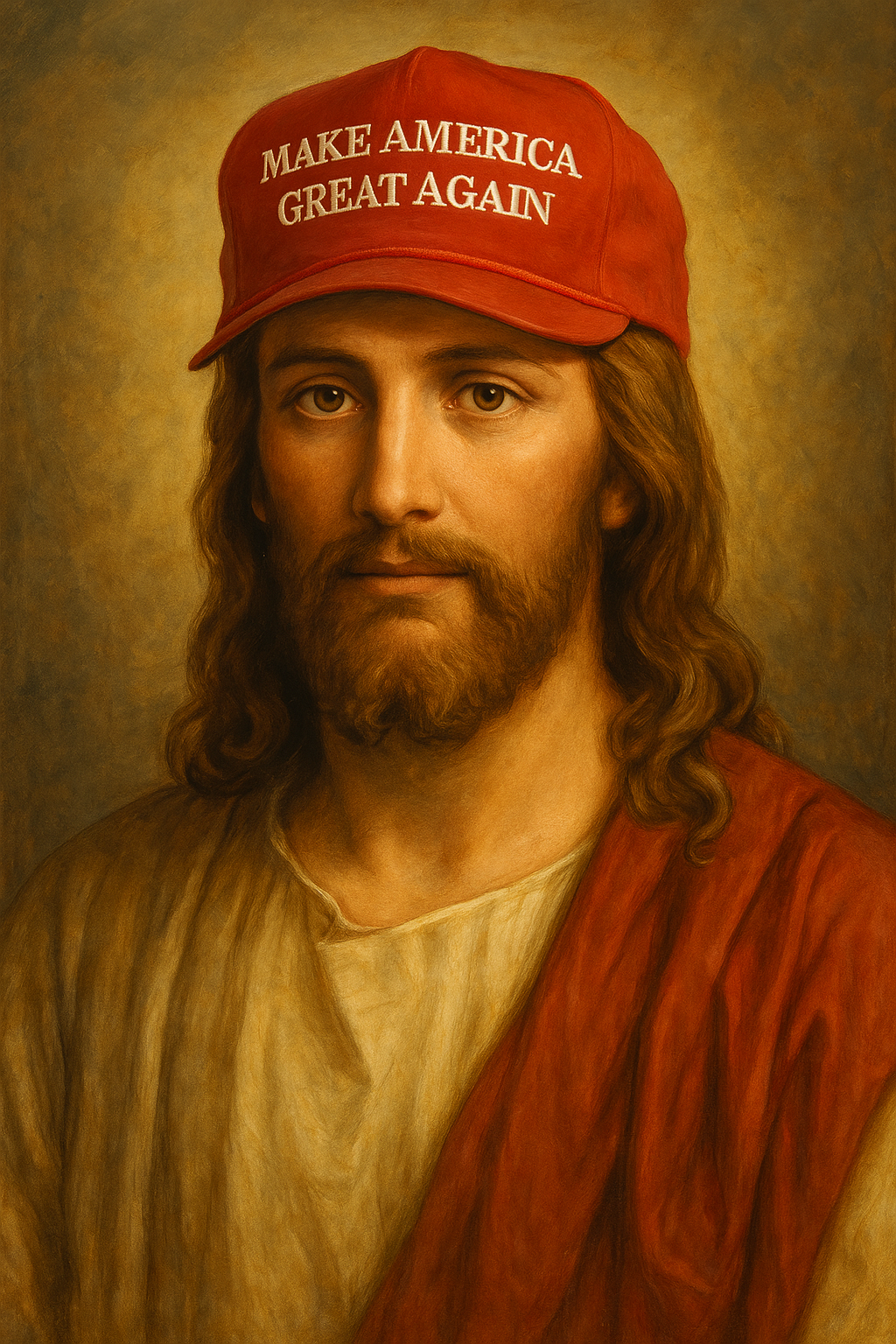
“Make America Great Again”—When, Exactly?
Let’s talk about the slogan. The red hat rallying cry. The emotional backbone of the MAGA movement:
“Make America Great Again.”
Okay.
But I have one question.
A real, honest, angry, brokenhearted, American question:
FUCKING WHEN?
When was this golden era you want us to go back to?
Was it when we had slaves?
When people were literally owned and bred and sold?
Was that greatness?
Was it Jim Crow?
Was it lynchings and segregated water fountains and white men calling it “tradition”?
Was it when women couldn’t vote?
When husbands could rape their wives and no one called it a crime?
Was it before gay people could marry?
Before trans people could be safe?
Before Black and brown communities could breathe without suspicion?
Is it really about “traditional family values”?
Or is that just a prettier way to say “know your place”?
Because every time someone says they want America back—
I want to know which version they mean.
Because if your nostalgia only works when others are invisible, erased, or afraid—
then your vision isn’t greatness.
It’s dominance.
It’s hierarchy with better branding.
Let’s stop pretending this is about flags and parades.
This is about control.
And I’m done giving polite cover to that kind of thinking.
Greenville, SC — A Microcosm of the Divide
I live in Greenville, South Carolina.
It’s beautiful here. It really is.
The trees. The food. The riverwalk. The charming downtown.
And if you just pass through, it feels like everything is working.
Money flowing. Cafés full. A city on the rise.
But if you stay a little longer…
If you go past Augusta Road, past the real estate brochures and craft beer festivals…
You’ll notice how tightly the city is segregated.
How carefully everyone stays in their lane.
The rich white families in the Augusta Road bubble barely interact with the Latin families in Berea.
The Black community in Nicholtown has deep roots and strength—but limited access to power.
They’re organized, but not resourced.
They care, but they aren’t listened to.
And why?
Because the elite class here—wealthy entrepreneurs, developers, and transplant families—have partnered with the Bob Jones / evangelical / MAGA base to control every lever of local government.
That’s not a conspiracy theory. That’s a lived reality.
It’s in the zoning laws.
It’s in the school board decisions.
It’s in the city planning committees where diversity is cosmetic and the money makes the rules.
And look—I’ll admit this too:
Some of what the rich have done here looks impressive.
Greenville has grown. It’s cleaner. Safer. Flashier.
They’ve built a model small city, and they’ve made themselves a lot of money in the process.
But I have to ask: At what cost?
Where are the bridges between these divided communities?
Where is the actual civic integration?
Where is the effort to lift everyone—not just sell the image of “success” while certain zip codes stay starved?
Let me say this as clearly as I can:
Greenville city would not be successful without Greenville County.
They’re treated like separate beasts, with separate leadership, separate struggles, separate futures.
But they are symbiotic.
They rise—or stagnate—together.
And if we had the courage to treat them as one, we could build something better than this polished divide we’re pretending is working.
Imagine:
- Public transit that connects the county and city seamlessly—so workers can get downtown without crawling through I-85 or circling a $20 parking lot.
- School funding that’s distributed with actual equity—so kids in Berea or Nicholtown get the same shot at a future as the kids in Alta Vista or Chanticleer.
- County-level coordination around housing, food access, and infrastructure—so we’re not letting sprawl choke out sustainability, or letting wealth funnel inward and leave the rest to struggle.
I understand why people don’t want to rock the boat.
The city works—for a certain kind of person.
And in a state like South Carolina, where so many towns are struggling or collapsing, Greenville shines brighter by comparison.
But here’s the trap:
We mistake privilege for progress.
Greenville works because we all need each other—but we refuse to face each other.
The wealth here depends on the labor and culture of communities it won’t even acknowledge.
And the power structure depends on people staying afraid to speak up.
I know that if I keep pushing the kinds of ideas I’m writing here—abolition of elite systems, DEI, truth and reconciliation, wealth redistribution, real civic inclusion—
I’ll piss off both conservatives and progressives.
I’ll get side-eyed by the liberals who benefit from polite segregation
and targeted by the reactionaries who think Jesus wrote the Constitution.
But maybe that means I’m hitting a nerve worth hitting.
Because this isn’t just about fixing America.
It’s about fixing Greenville.
Here.
Now.
Before we polish the surface so smooth that no one sees what’s rotting underneath.
The Untouchable Hydra
There’s one thing almost no one in public life seems willing to challenge.
Not Democrats. Not Republicans. Not even the loudest so-called “anti-establishment” voices.
The military-industrial complex.
We throw that phrase around like a dusty relic from a 1960s speech, but we don’t sit with what it actually means.
It means we’ve built a country where the single biggest expenditure in our federal budget goes toward destruction.
We don’t even call it that—we call it “defense.”
But we spend more on the military than the next ten nations combined.
We fund war like it’s oxygen.
And then we nickel-and-dime everything that makes a society worth defending.
People get furious about “government waste” when it comes to food stamps or school lunches.
They throw tantrums over a library book with a queer character in it.
They’ll rage about the cost of public education, healthcare, mental health programs, or clean energy.
But nobody blinks when we pour trillions into a war machine.
And let’s be honest:
We do need a military.
We do need to be able to defend ourselves and our allies.
But what we have now is not just a military.
It’s an empire enforcement mechanism.
It’s a global business with a gun.
And the part that really gets me?
The military is already a socialist system—just one that exists to preserve capitalism.
Free housing. Free healthcare. Guaranteed pay. A job pipeline. Subsidized food. Government-funded child care. Education assistance. VA benefits.
The military is the only place where America embraces collectivism—and we use it to train people to fight for the very system that denies those same benefits to civilians.
How is it that we’ll give a soldier access to every social good—as long as they’re willing to kill or die to keep others from having it too?
That’s not defense.
That’s the scaffolding of a broken empire.
And the hollowness of it all—the truth we bury with flags and fireworks—shows itself in how we treat soldiers after their service ends.
Some ex-military do fine.
They get jobs. They reintegrate. They carry the discipline and pride into civilian life.
But too many—far too many—become homeless, addicted, discarded.
Shells of who they were.
Because the system that gave them everything to serve took everything back the moment they were no longer useful.
The military isn’t serving them anymore.
It’s not built to.
It exists to serve itself—and to protect the elite class that feeds it.
Not the average citizen.
Not the worker.
Not the broken.
Not the people who believed they were fighting for something noble.
If we can’t even take care of the ones who gave their bodies and minds to this country,
then what exactly are we defending?
 Frank M. Anderson's Writing
Leave a comment