
By Frank M. Anderson
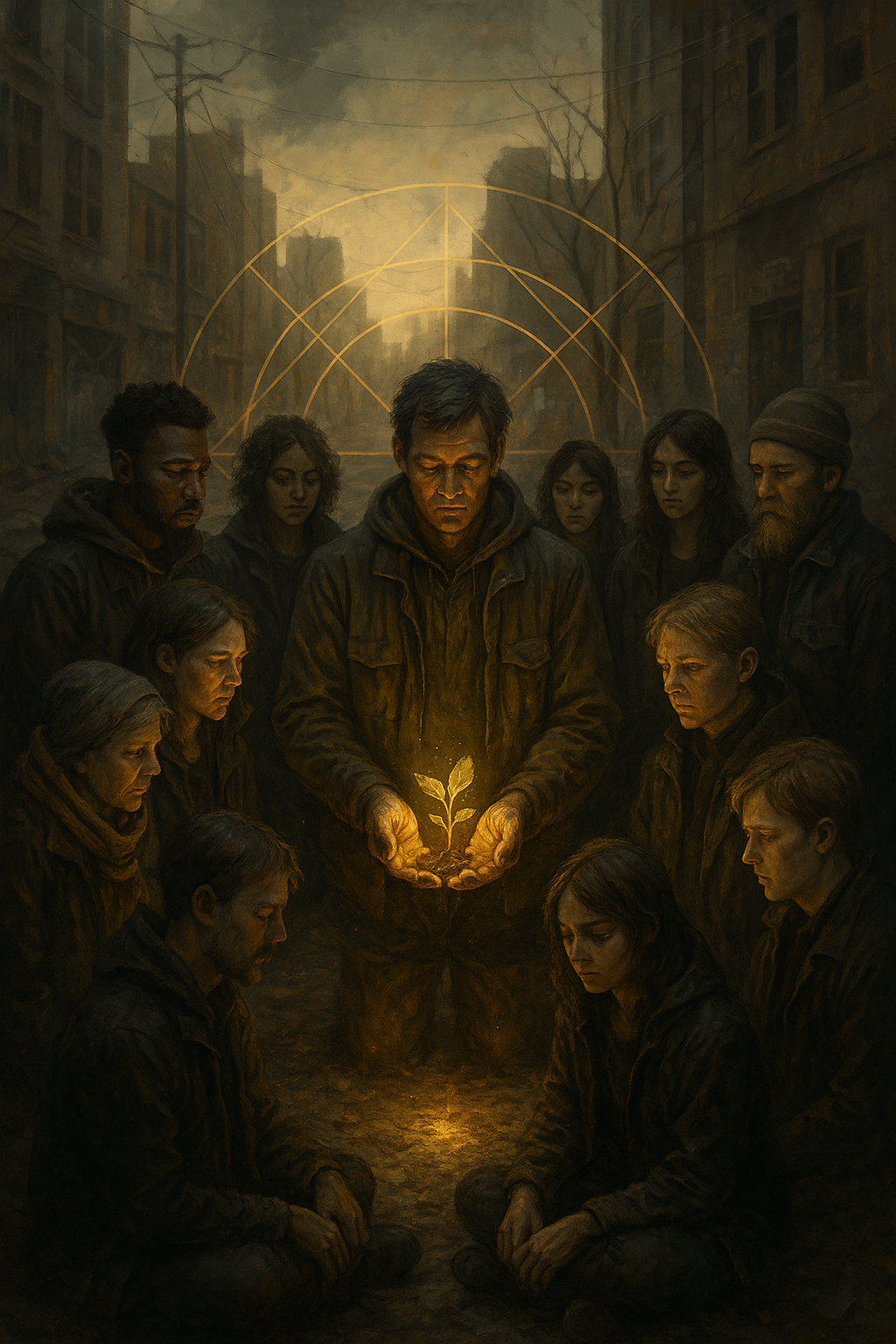
Reimagining the Civic Contract in an Age of Collapse
Something remarkable is happening when you look at the voices breaking through the noise of modern politics. Dean Withers, a Gen Z debate phenom, and Pete Buttigieg, a calm, incisive explainer of public service, couldn’t be more different in style—but they both model something the modern Democratic Party keeps failing at: clarity, courage, and coherence.
Withers doesn’t shout people down. He engages, educates, and exposes contradictions with surgical calm. Buttigieg, meanwhile, articulates something most politicians can’t seem to say out loud: the government exists to make people’s lives better. That’s it. That’s the job.
Compare that to the broader Democratic establishment—muddy on messaging, defensive on policy, and often hypocritical in practice. They campaign on justice while cashing checks from banks. They promise climate action while greenlighting pipelines. They fear being labeled socialist, so they fumble their own values.
We’ve made “socialism” into a dirty word, while quietly depending on it every day: roads, fire departments, public schools, disaster relief. The problem isn’t public support. The problem is bad delivery, bad messaging, and fear of backlash.
Here’s what I believe: Balance is almost always the answer. We don’t need to burn down capitalism or bow to it. We don’t need to idolize the market or abolish it. We need to build a system that lifts people, encourages contribution, and preserves dignity.
This manifesto is about that balance. It’s about designing a functional future—not perfect, not utopian, but honest, human, and alive.
🧭 The Three Core Pillars of a Functional Future
This isn’t about revolution for revolution’s sake. It’s about building a society where people are supported to grow, create, contribute, and survive with dignity. A society where success isn’t built on someone else’s suffering—and where systems are designed to lift, not trap.
This is not a utopia. It’s a blueprint for a functional, fairer future.
Lifelong, Mastery-Based Education
Most people think of school as something that happens early in life—something you finish. But what if education didn’t end at 18? What if it followed you, supported you, and grew with you for as long as you needed it?
Imagine a world where returning to school at 40 to finally learn algebra—or to write, weld, paint, or code—isn’t a sign of failure, but a vital act of citizenship. Where the point isn’t competition, but mastery. Where learning is measured by what you can do, not just what you can repeat on a test.
In this system, every community would have hubs for lifelong education. Not just for job training, but for the art of living—how to file taxes, navigate contracts, understand your rights, fix a sink, or tell your story. We would blend practical skills with creative practice. Imagine a welding class next to a community choir. Pottery across the hall from a workshop on digital privacy. Not just education, but culture creation.
We’ve long treated school like a funnel: narrow, rigid, and designed to push people out. Let’s turn it into a platform—wide, supportive, and open to everyone, always. Not just to make smarter workers, but smarter citizens—and more complete humans.
Basic Civic Income (BCI)
Some people hear “basic income” and picture checks arriving no-questions-asked. But what I’m proposing is different. This isn’t about paying people to sit idle. It’s about recognizing all the invisible labor that already props up society—and finally valuing it.
Under a Basic Civic Income, people would receive support not for holding a job, but for participating in the cultural and emotional life of their community. That could mean volunteering at a library, teaching an elder how to use a phone, planting trees, reading to kids, making public art, joining a neighborhood climate corps, or learning a new skill that you later share.
There are so many ways to serve the public good that don’t show up on a paycheck. This income is meant to catch those, elevate them, and sustain the people doing them.
It’s not a wage. It’s not welfare. It’s a social contract: contribute what you can, and your society gives you a stable floor. Not as charity. As respect.
Wealth Without Exploitation
Let’s be clear: wealth itself is not the enemy. Exploitation is.
We can live in a world where people get rich—so long as they don’t do it by trapping others in poverty. If your wealth comes from invention, storytelling, stewardship, or lifting others up? Great. If it comes from hoarding housing, underpaying labor, or moving numbers in a way that hurts real communities? That’s not genius. That’s theft in slow motion.
We should reward long-term thinking and shared prosperity. Worker-owned businesses. Community land trusts. Cooperatives. Venture projects where success means everyone wins.
Let’s stop pretending the economy is neutral. It’s a machine built by choices—and we can choose again. We don’t need to punish ambition. We just need to dismantle the scaffolding of cruelty that ambition too often climbs.
The Advocate–Listener Class
Some needs don’t fit into forms. Some pain doesn’t show up on data sheets. And some people fall through the cracks not because no one cares, but because no one is assigned to notice.
That’s where the Advocate–Listener comes in. Not a therapist. Not a cop. Not a caseworker. Just a person whose job it is to sit with others, hear them, and help them find a path forward. Sometimes that means listening to grief or anger. Sometimes it means explaining rights, navigating paperwork, or accompanying someone to a hearing. Sometimes it just means being there so someone knows they’re not alone.
This role isn’t about control—it’s about connection. Advocate–Listeners would work in schools, clinics, libraries, shelters, and anywhere else people go when life breaks open. They would receive real training, real pay, and real status. Because this isn’t charity. It’s infrastructure.
We talk a lot about systems. But systems are cold without witnesses. The Advocate–Listener brings warmth back into the public square. They make it harder for suffering to hide in plain sight.
🧠 What We Believe
- We are not here to punish the rich—but to lift the floor for everyone.
- We are not demanding equality of outcome—but we demand dignity of access.
- We do not believe in obedience to the system—we believe in participation with it.
- We don’t want more consumers—we want more creators.
- We believe education, dignity, art, and advocacy are not luxuries. They’re infrastructure.
This is not a handout society.
This is not a surveillance state.
This is not utopia.
It’s a functional future—and we can build it.
But that’s just the start.
Because here’s the truth: we already pretend to live in a world like this. We dress it up in campaign ads and brand slogans. We celebrate the myth while denying the substance.
So this is me, saying it plainly:
We could build schools that never shut their doors.
We could support people not just to survive, but to belong.
We could stop asking who deserves help and start asking how we help each other best.
This shouldn’t sound radical. But it does.
And if that still feels impossible—
ask yourself who taught you to believe that.
Then unlearn it.
And come help me build.
 Frank M. Anderson's Writing
Leave a comment