
In this current novel I am writing, recursion is not just a narrative device—it’s the very structure of grief, memory, and broken authorship. Inside a labyrinthine Archive, language collapses in on itself, mirrors write back, and dead characters fight to remain legible. It’s a story of death haunting syntax, of grammar breaking under emotional pressure, of writers unsure if they are gods or ghosts.
Which is why choosing the right title matters.
As I prepare to finalize the title of my metafictional, grief-soaked, recursion-bending novel, I’ve narrowed it down to eight finalists. Each evokes a different angle of the book’s essence—language unraveling, haunted memory, bureaucratic absurdity, broken authorship. Below, I’ll share the finalists with extended thoughts on their strengths, tonal resonances, and potential pitfalls. Your vote will help me decide which title best honors the story’s strange emotional gravity.

1. Grammar for the Dead: Past is Participle
Strengths: Haunting and cerebral, this title captures the book’s blend of linguistics and loss. “Grammar for the Dead” suggests a survival manual for memory, the rules of communication after the subject is gone. “Past is Participle” plays as both a linguistic pun and a recursive clue—what has passed is still present, still shaping. It’s deeply thematic and metaphorically loaded.
Weaknesses: It may be too heady or opaque for some readers. The grammar pun might come across as overly clever or academic without proper context. Still, for those attuned to metafiction and language-as-structure, this could resonate profoundly.

2. Syntax for the Departed: Filed by the Office of Anomalous Phenomena
Strengths: Atmospheric and world-building in nature, this title suggests a haunting logic system encoded into a bureaucratic framework. The combination of cold filing systems with elegiac phrasing like “Syntax for the Departed” implies both cosmic horror and institutional absurdity. It evokes echoes of House of Leaves, Welcome to Night Vale, and dystopian satire.
Weaknesses: Its length and specificity could alienate readers not fluent in speculative or metafictional tone. The subtitle adds lore but may tip too far into the surreal if not anchored well in marketing or back cover copy.
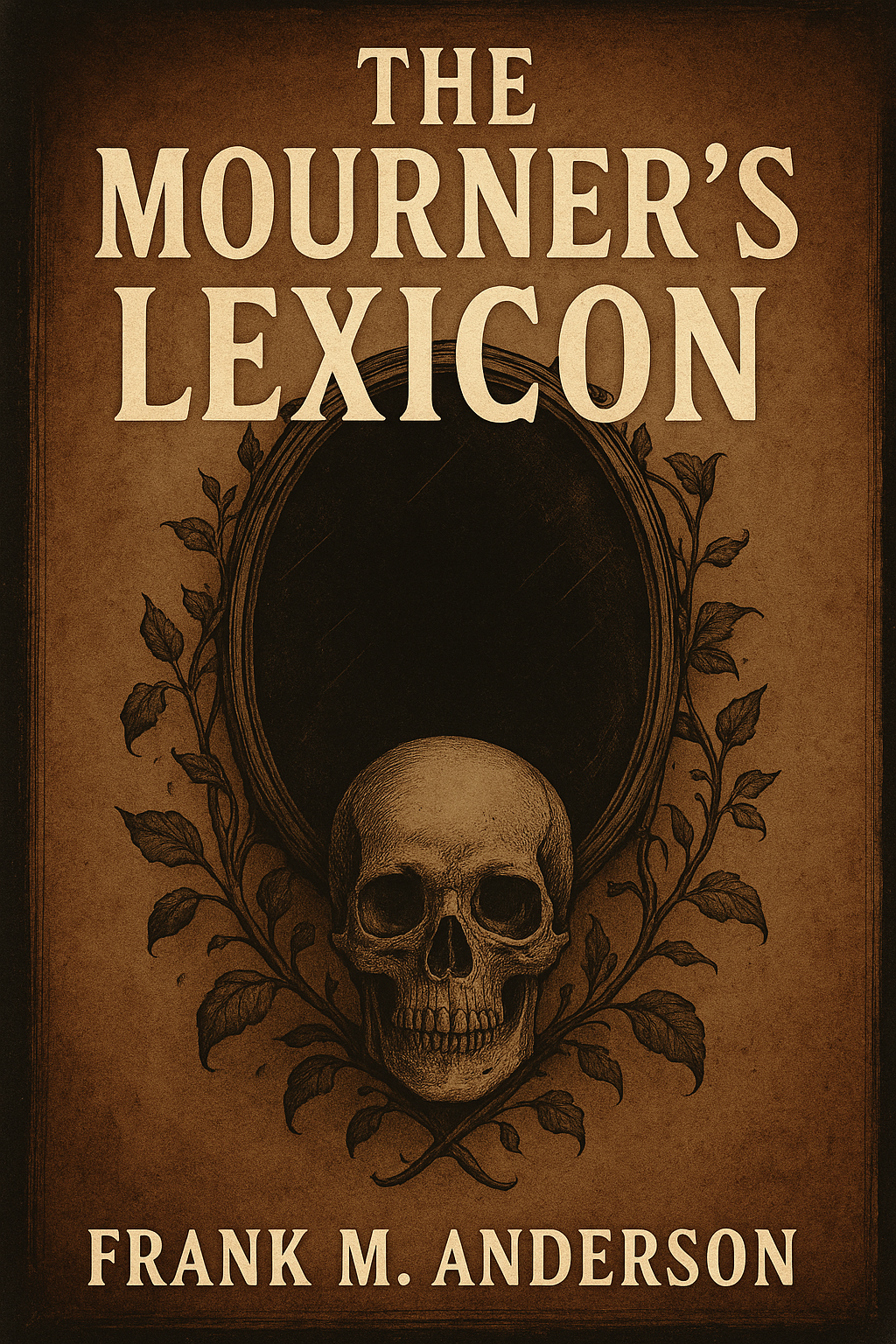
3. The Mourner’s Lexicon
Strengths: A graceful, emotionally resonant title that promises reflection, grief, and poetic introspection. It suggests a catalog or private language developed in response to loss—quiet, literary, and grounded in human emotion. This would pair well with the novel’s deeper emotional arcs.
Weaknesses: It doesn’t signal the book’s recursive or experimental structure. Readers might expect a more conventional literary novel. It may underrepresent the system-bending, Archive-embedded, self-aware mechanics at the heart of the story.

4. Echoes of a Dying Language
Strengths: Evocative and haunting, this title points directly to decay—of language, of self, of system. It suggests that the story is about what slips through the cracks, the fading signals from a once-whole narrative. It fits the novel’s recurring themes of fractured communication, archival memory, and metafictional death.
Weaknesses: It risks being a bit too vague or lyrical without clearly implying what genre or tone the book actually belongs to. It has strong emotional pull but weaker narrative direction. Readers may wonder if it’s poetry, nonfiction, or speculative fiction.
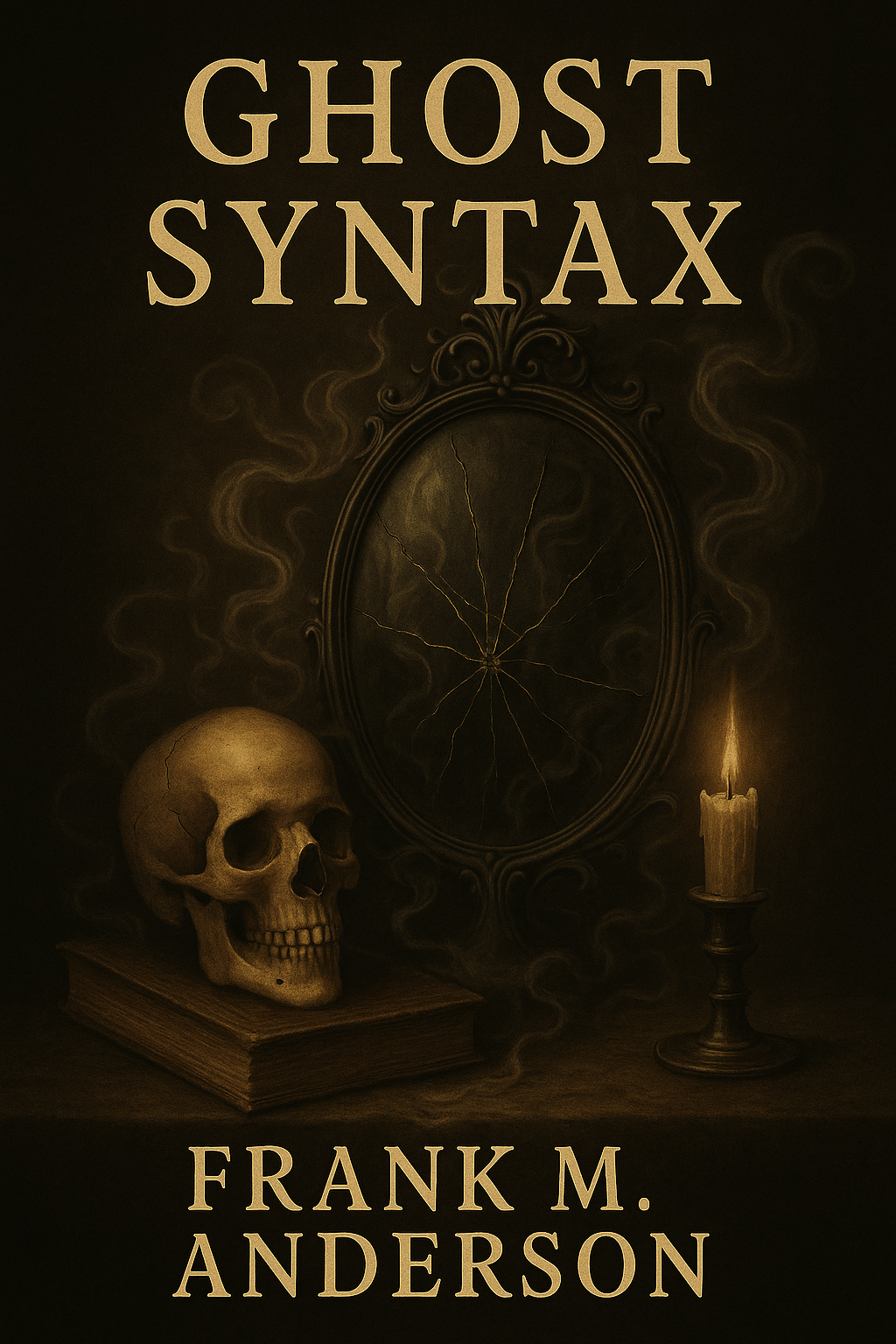
5. Ghost Syntax
Strengths: Short, punchy, and richly symbolic. The juxtaposition of ghost (haunting, memory, absence) with syntax (structure, grammar, order) encapsulates much of the novel’s logic. It’s evocative without overexplaining and invites questions.
Weaknesses: Its minimalism may make it feel underwhelming compared to some of the longer, more theatrical titles. Without context, it might read as too abstract or too slight to stand on its own.
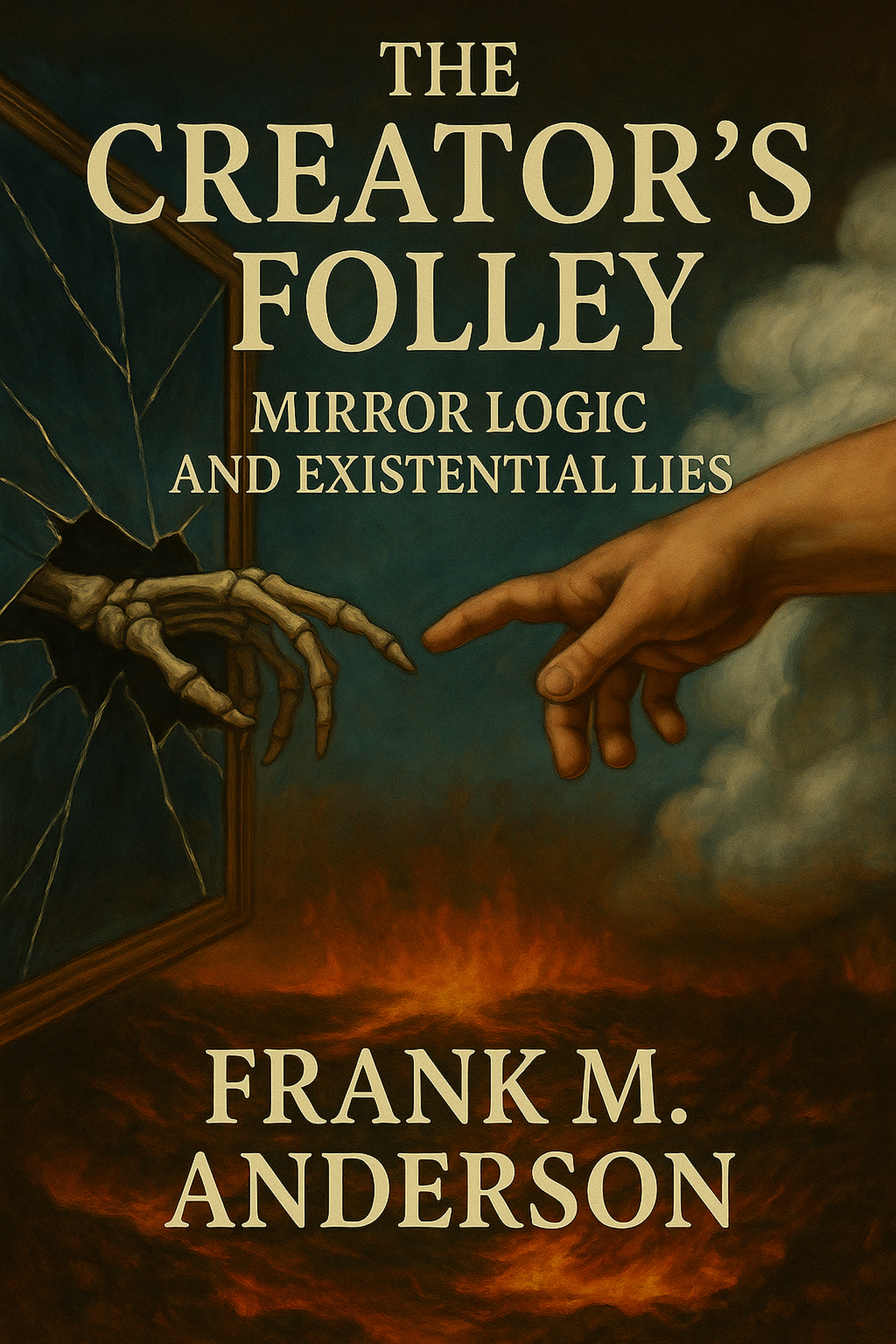
6. The Creator’s Folly: Mirror Logic and Existential Lies
Strengths: Dramatic and philosophical, this title stakes a strong claim in the metaphysical arena. It points to the failure of the author-god, the mirror systems that collapse under their own recursive loops, and the lies embedded in narrative authority. It fits a bold, cerebral novel.
Weaknesses: It may feel too heavy-handed or overly grandiose. The phrase “Mirror Logic and Existential Lies” could sound dense or intimidating. Some readers might interpret it as parody or satire rather than earnest metafiction.

7. Mirror Logic and Existential Lies
Strengths: A tighter, more focused version of the above. It still gestures toward recursion, authorship, and philosophical collapse, but it does so in a cleaner package. It feels literary, slightly surreal, and hints at what the story actually does rather than what it says.
Weaknesses: While thematically accurate, it may lack the emotional warmth or poetic tone that draws in readers of literary grief fiction. It might come across as a bit cold or distant without supporting material.
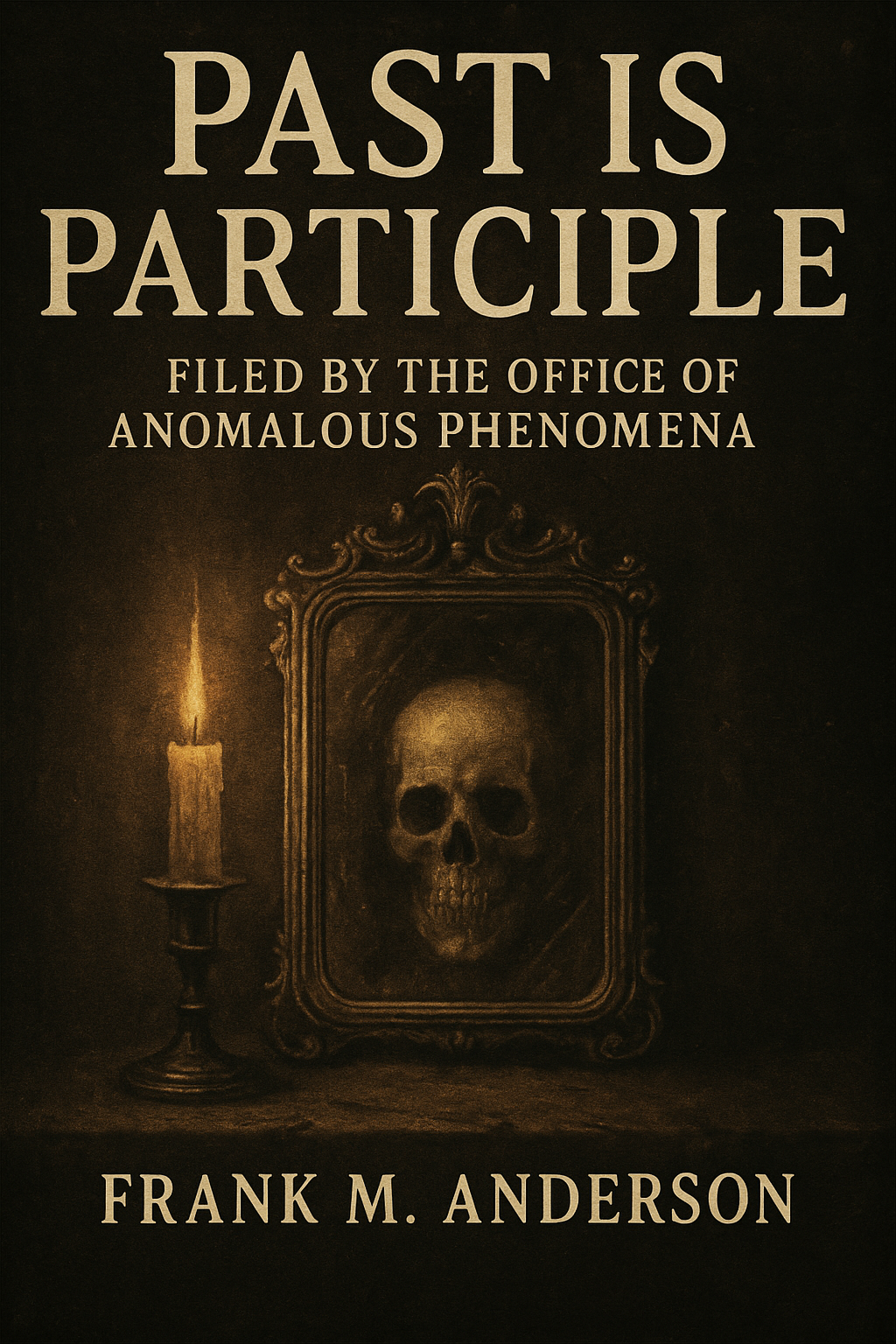
8. Past is Participle: Filed by the Office of Anomalous Phenomena
Strengths: This option plays with tone—clever but grounded, humorous but eerie. The title invites curiosity while the subtitle implies metafictional structure, weird horror, or speculative bureaucracy. It may appeal to fans of Severance, The Magnus Archives, or cosmic satire.
Weaknesses: Readers unfamiliar with grammar terminology may miss the recursive pun. The subtitle may feel overly quirky or obscure depending on the book’s final tone. Still, it bridges accessibility and mystery better than some.
Now I need your help.
Which of these titles feels right to you? Which one would make you stop and look twice? Leave your vote and help shape the identity of this strange, haunted novel.
 Frank M. Anderson's Writing
Leave a comment