

When I finished The Cancer Diet, I thought I knew exactly where I was going next.
I packaged the file, sent it off for publication, and felt that strange mixture of relief and anticipation that comes with letting a book go. The last lines were barely dry before I could see the shape of the next one. I didn’t have a title at first, but I knew what it was about: the “lying years,” a period of my life when I lived behind masks—sometimes for survival, sometimes out of habit, sometimes because I didn’t know who I was without them.
It wasn’t just a phrase; it felt like a territory I could map. A rich, unmined vein that I knew could carry an entire book.
What I didn’t know was how much life would intrude the moment I set out to write it.
Life started lifin’.
Things came apart, relationships shifted, health flared up, the usual chaos found a way to spill into every corner. And in that chaos, half the book ended up pouring out in a manic stream of consciousness that drove the narrative in ways I didn’t expect. I didn’t labor over The Lying Years in the slow, methodical way I thought I would. Instead, I completed it in record time, chasing bursts of clarity while everything around me tilted.
Page Count, Word Count, and the Shock of Scale
In print, The Cancer Diet ran about 285 pages in my chosen format, roughly sixty-something thousand words. By contrast, The Lying Years ended up at over 80,000 words and—this still surprises me—469 pages. Twice the length, and not because I padded anything. The extra weight comes from two main things:
- The scope of events crammed into a short window of my life – the writing is dense with happenings.
- The political spine of the book – moments when my personal story intersects with the larger state of the country. These sections are not polite asides; they’re part of the structure.
I know those political passages may turn some readers off. That’s fine. I’m not here to court agreement. I’m here to tell the truth as I see it—and ideally to offer solutions, not just complaints. My fear has always been sounding like I’m just bitching about the situation we’re in as Americans. But underneath it, I’m working through possibilities for change. My hope is that readers look past the rant to the repair.
Shared DNA: Non-Linearity
Here’s something crucial: both books move like memory, not like a timeline. The Cancer Diet was originally going to be chronological—my first editor suggested reordering it into narrative form—but even then, it was full of temporal leaps.
With The Lying Years, I leaned into that non-linear approach completely. It’s more like a conversation with yourself in the kitchen at midnight, where one story reminds you of another, and suddenly you’re twenty years away from where you started.
That looseness isn’t laziness. It’s intentional. It creates the sense that anything can happen next, and it allows emotional truths to arrive in unexpected order.
The Theory Behind the Work
If The Cancer Diet was about survival, The Lying Years is about what comes after—what it takes to dismantle the internal machinery that got you through but now holds you back.
My framework is simple but hard to live:
- Radical honesty leads to acceptance.
- Acceptance leads to surrender.
- Surrender leads to gratitude.
- And gratitude is the doorway through which you finally let love in.
This isn’t a Hallmark ladder of feelings; it’s a discipline. It means being honest even when it could cost you something. It means accepting what is, not just what you like. It means surrendering—not giving up, but releasing control over outcomes. And it means finding gratitude in the middle of the mess, not after it’s cleaned up.
Flexibility as a Survival Skill
If I have one quality that has kept me alive—and kept me writing—it’s flexibility.
I adapt. When a book doesn’t go the way I planned, I follow where it leads. When life yanks me sideways, I write from that new angle. This isn’t just creative agility; it’s life support.
The Lying Years demanded that flexibility. I had my outline, my stack of old blog posts to adapt, my essays written in other seasons of my life (some going back as far as my Empire, Nevada days). But the actual composition became something else entirely: part archive, part confession, part political tract, part late-night phone call.
Process: The Manic Engine
Half the book came out in a long burst of manic energy that I let happen without trying to tame it. That rawness is baked into the text, and it’s one of the reasons I think the book works. The other half is adapted and integrated from older pieces, revised to speak to the present.
Unlike The Cancer Diet, which I self-published on my own schedule, The Lying Years is moving on a much faster track. If I were publishing it solo, there’s no way it could come out this soon. My current plan is to publish toward the end of the year—maybe around Christmas—but I’m giving myself room to adjust depending on how much workshopping I want to do first.
Why Workshop This One?
I’m holding off finalizing The Lying Years until I begin the WriteShare Intensive Program, where I can get feedback from other authors. I want someone to read The Cancer Diet and The Lying Years back-to-back and help me tighten the through-lines, see where the connection could be sharper, and identify any sections that could be cut without losing the core.
Because yes, I could trim. But length isn’t the problem—it’s clarity. And clarity is something I’m always chasing.
The Political Spine
I keep coming back to this, because it surprised me how deeply the politics embedded themselves in the book. They aren’t detours; they’re part of the load-bearing structure. The personal and political are so entwined in my life that to strip one from the other would be dishonest. If The Cancer Diet was more personal with political moments, The Lying Years might be the reverse—personal moments inside a political frame.
I know some readers want escape from politics in memoir. But my life doesn’t work that way. The lying years weren’t just about me lying to myself; they were also about the lies we tell each other as a society, and the ones we’re told from the top down.
What’s Next
I don’t have a title for the next book, but I know I want it to be about good memories and positive thinking. The minute I wrote “The Lying Years” chapter in The Cancer Diet, I knew it was my next step. I knew it held answers and a rich field to work in. I just didn’t know what life would hand me in between.
Now that I’m here, I can see that The Lying Years is both more intentional and more alive than I expected. Whether that’s just the glow of finishing or something real, I’ll leave for the reader to decide.
But here’s what I know:
Both books are non-linear. Both jump through time like memory does. Both are attempts to tell the truth, even when it’s messy. And both are experiments in how radical honesty can change a life.
The only difference is that this time, I wasn’t just writing about it.
I was living it as it happened.
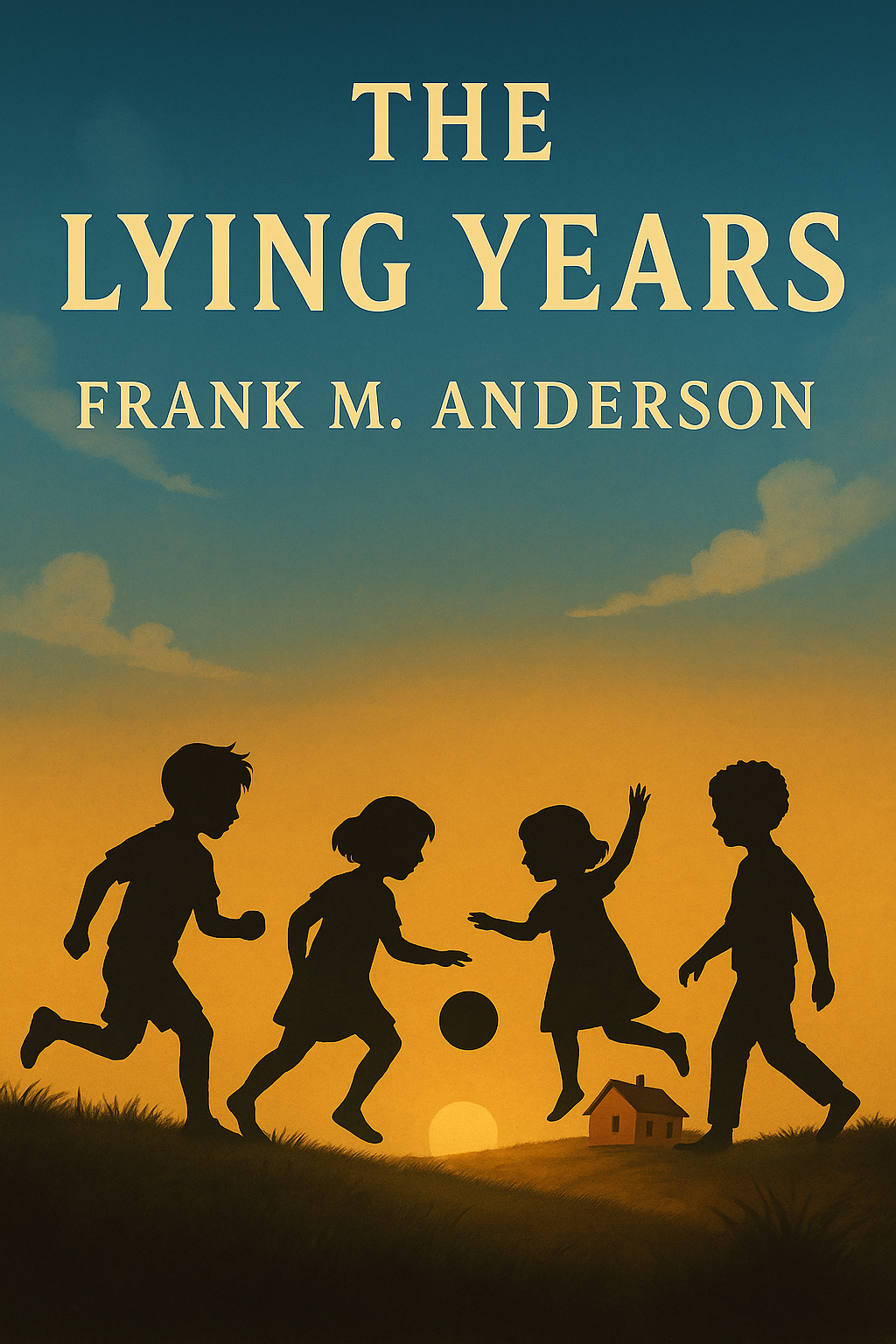
Not The Final Cover Of The Lying Years
Excerpt from The Lying Years
The mailbox isn’t just paper.
It’s a mirror.
And some days, I can’t face it.
I was sitting with that thought when I realized he was in the room.
Jabba.
Not on a dais this time—just slouched on my couch, somehow heavier than the furniture itself, folds spilling into the afternoon light cutting through the blinds. He didn’t look at me. Just chewed on something I couldn’t see.
“We need to talk,” I said.
He didn’t turn his head. “About how you’re slacking again?”
“No. About you. About what you do to me.”
His jaw worked slowly. The air between us felt thick.
“You’re not helping me,” I told him. “You think you are. You think you’re my motivation, my edge. But you’re just making me hate myself.”
A scoff, low in his throat.
“Poor baby. Self-loathing’s the only thing that’s kept you moving. Without me, you’d rot on this couch for real.”
“That’s a lie.” I took a step toward him.
“I was rotting because of you. You whisper every time I try: Not good enough. Try harder. Faster. Cleaner. And when I can’t, you laugh. You tell me I knew I’d fail. You tell me this version of me doesn’t deserve love. Or rest. Or grace.”
For the first time, his eyes lifted to meet mine. And in them—just for a moment—something like sadness.
“You think I want to be like this?” His voice was quieter.
“You made me. Every time you punished yourself silently. Every time you flinched from a compliment. Every time you said, If I were just a little better—maybe then… I grew stronger. You fed me.”
“I know,” I said, my voice shaking. “And I’m done feeding you.”
He shuddered, and then his shape began to fold inward. The rippling mass collapsed on itself, cracking and tearing like old fabric, until what was left was… me. Not some perfected version—just me, thinner, pale, eyes tired.
“I was just trying to protect us,” he said, his voice trembling.
“If we stay ahead of the shame, maybe it won’t catch us.”
“But it always does,” I told him. “And the only thing I’ve learned is this—shame isn’t armor. It’s poison.”
We looked at each other for a long time.
“So what now?” he asked.
“We try something harder,” I said.
“We try forgiveness. We try showing up without you screaming at me in the background.”
“And if we fail?”
“Then we fail. But we fail honest.”
I sat beside him. We didn’t hug, not yet. But we breathed in the same rhythm, and for once it felt like we were on the same side.
The blinds cut the light into narrow bands, dust drifting between them. Outside, the mailbox was still waiting. But I knew I’d get to it. Not today, maybe—but soon.
Because the voice in my head wasn’t telling me to avoid it anymore.
About this passage
Yes, that’s Jabba the Hutt. The giant, slug-like gangster from Star Wars. But in my head, he’s something else — my shame, given a body. The voice that keeps a running commentary on my flaws, dressed in the folds and sneer of a character who’s both grotesque and oddly familiar.
I chose Jabba because shame is theatrical. It’s not a whisper; it’s a spectacle. It takes up the whole couch. It acts like it owns the room. In The Lying Years, Jabba shows up whenever I’m wrestling with the weight of self-criticism, sometimes mocking me, sometimes bargaining, sometimes — like here — revealing a sliver of vulnerability.
This scene is important to me because it’s where I stop pretending I can starve him out with perfectionism. It’s where I move from fighting shame to talking to it. And that, in my larger journey, is a key step in what I believe:
Radical honesty leads to radical acceptance. Radical acceptance leads to surrender. Surrender leads to gratitude. And gratitude is how you let love in.
 Frank M. Anderson's Writing
Leave a comment