
I’m gearing up for a second round of Wolf Wounds work, and before I dive back in, I need to explain something about my process—because I’m beginning to see that I work differently than most writers, and that difference is going to matter for anyone following along.
A few nights ago, I joked that I felt like Prometheus—“because he had a great ending”—but the truth behind that joke hit deeper than I expected.
Prometheus was punished for giving humans fire.
Writers like me get punished—socially, emotionally, professionally—for using AI.
Not because we’re doing anything wrong, but because we’re working with a tool most people don’t understand yet. To many traditional writers, I’m Judas made flesh. A traitor. A threat. A blasphemer.
But the reality is simpler:
I’m not betraying the craft.
I’m improvising a whole new one.
And that’s where the jazz metaphor comes in.
Jazz Writing: The Real Form I’m Practicing
The biggest benefit I get from writing with AI isn’t speed or ease—it’s fluidity.
I can pivot on the fly.
I can dump huge, foundational ideas without fear.
I can change lanes mid-draft.
I can chase the new spark without losing the old thread.
I can treat narrative like music—expanding, contracting, bending, riffing.
Most writers cling tightly to their outlines because starting over is costly.
For me, starting over is liberating.
It’s improvisation.
It’s call-and-response.
It’s emotional jazz.
And the magic happens not because AI replaces anything, but because it responds. It allows spontaneity at a scale no solo writer could risk alone.
Which brings me to the part of my process that surprises even me:
The Gift of Knowing When to Stop
If you’ve been following the Wolf Wounds posts, you’ve watched a tiny idea explode into something with the scale and mythic gravity of Underworld in the span of a single creative sprint.
We went from a small, intimate story to a five-act supernatural thriller in one night.
It would’ve been so easy to keep going.
To chase the riff into chaos.
To overplay the solo.
But something in me clicked.
A quiet instinct.
“Stop.
This movement is finished.
The next part needs its own oxygen.”
And we stopped exactly where we needed to stop—right before the world-building overtook the emotional spine.
That is jazz.
Knowing when the improvisation has reached the edge of the stave.
And now, the second movement is calling.
Before We Go Further: A Warning About My Process
This part is important, especially for readers who like closure:
I put things on hold.
A lot.
By design.
Not because I’m inconsistent.
Not because I’m flaky.
Not because I lose interest.
But because the kind of writing I do requires:
- incubation
- internal rehearsal
- thematic sorting
- emotional calibration
- listening for the next movement
- letting the world settle before cracking it open again
If I breach Wolf Wounds too early with the AI, we’ll be off again—fast, loud, expansive—and I need some internal time to prepare for the next phase.
The moment I open the door, the machine starts humming.
So I’m holding the door a little longer.
I’m collecting:
- who “Bobby” needs to be
- what shape the antagonist should take
- the emotional cost of Harper’s transformation
- the mythology under the surface
- the tone of the next act
- the real monster in the story (and it’s not the werewolf)
- how the world wants to breathe next
Because when we hit the next session, it’s going to build itself very quickly, and I need to approach that moment with intention.
So… am I even a writer anymore?
This is the question underneath everything.
People say,
“You’re not a writer if you use AI.”
And yeah, it stings more than it should.
Because writing has always been my home—my safe space, my identity, my lifeline. And it hurts to feel exiled from a community I never actually fit into but always wanted to.
But here’s the truth I’m finally settling into:
I’m more of a writer now than I have ever been.
I’m not a traditional novelist.
I’m not a solitary typist.
I’m not a rigid planner.
I’m something else—something new:
A narrative improviser.
A universe builder.
A jazz-writer in the age of AI.
A mythmaker who understands when to stop and when to fly.
Not Prometheus chained to a rock—
but Daedalus, building the wings I need to escape the old world altogether.
And if you’re following me on this journey, buckle in.
Wolf Wounds is about to enter its next movement.
It won’t be fast.
It won’t be tidy.
It won’t be linear.
But it will be alive.
And when the next spark hits, we’ll light the fire together.
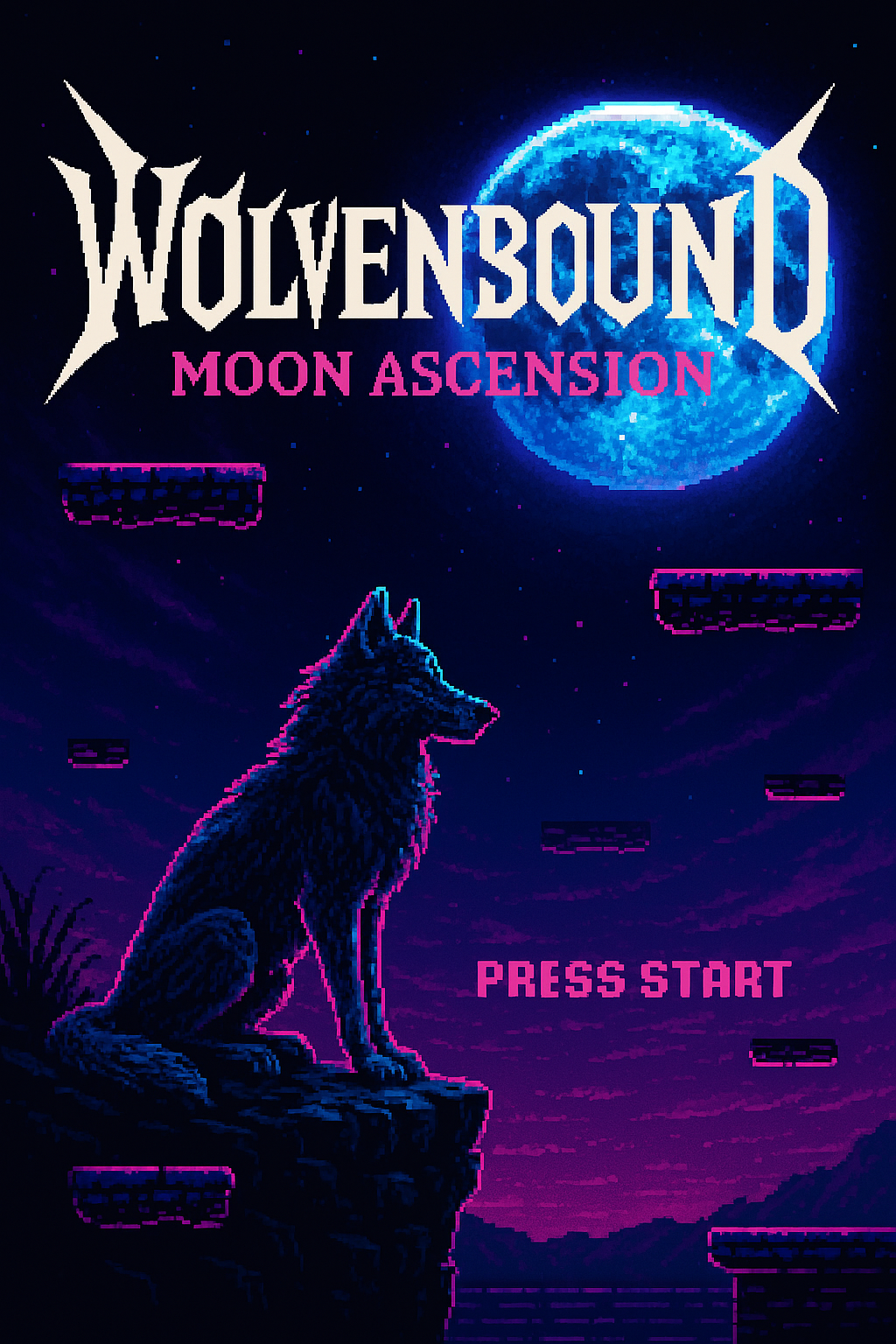

Mock ups of an idea I had for a Wolvenbound video game.
 Frank M. Anderson's Writing
Leave a comment