
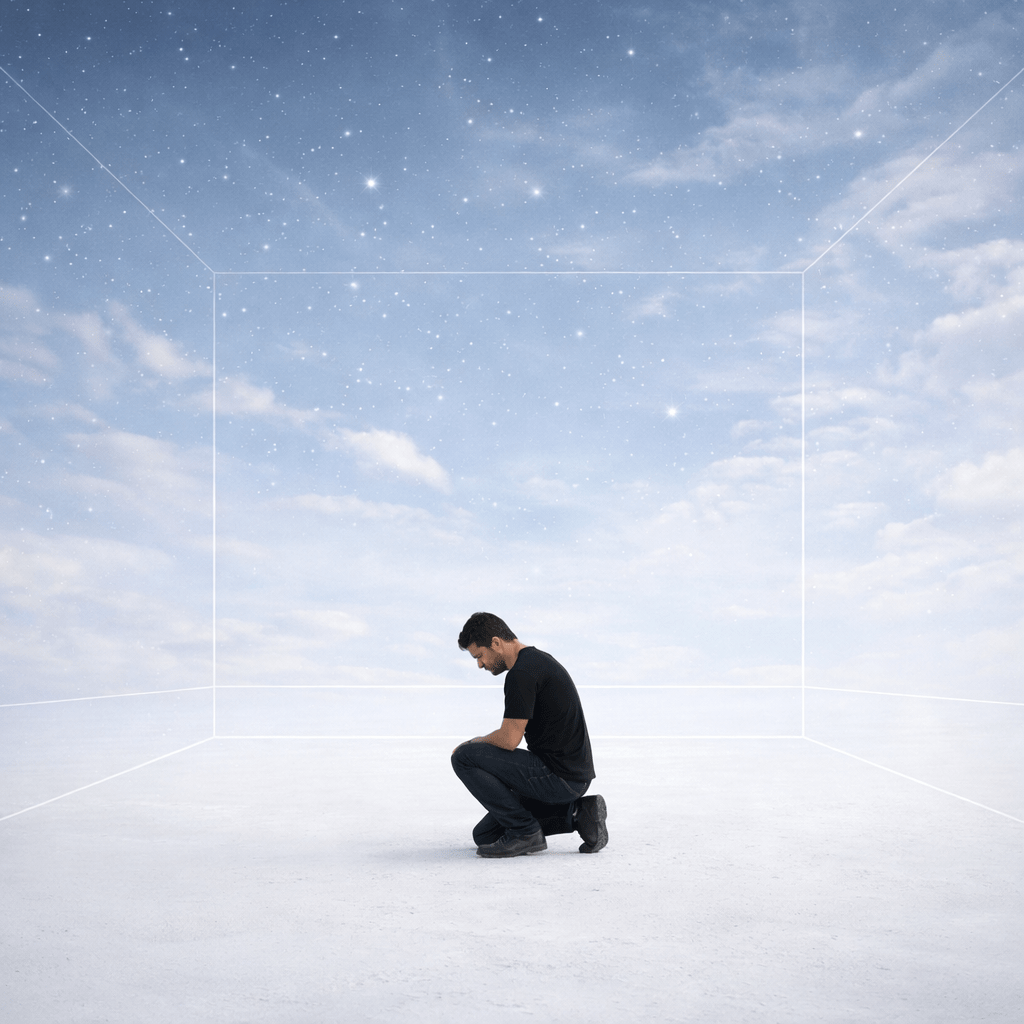
I’ve always wanted to have a relationship with God. Not just belief, and not just ritual. I want to understand the why behind things—the how. I want to know that there is something beyond myself I can turn to when my own mind runs out of answers.
I spoke about doubt recently, and today I keep coming back to hope. Not the kind we talk about casually, but the kind we rely on more than we realize. Because we do a lot of wishing these days, and not nearly enough acting.
Whenever there’s a new disaster, you see it immediately—“thoughts and prayers.” It shows up so quickly, so automatically, that it’s hard to tell whether it means anything anymore. It feels less like a response and more like a reflex. Something we say because we don’t know what else to do, or maybe because it allows us to feel like we’ve done something without actually doing anything at all.
And the truth is, things don’t change with thoughts and prayers alone. They never have. If anything, they’ve become a way to soften the weight of what’s happening without forcing us to carry any of it.
But this moment we’re in doesn’t really allow for that anymore. The problems we’re facing aren’t new. We’ve seen them coming for years—decades, even. Pollution pushed aside like a future problem. Systems stretched thinner and thinner without ever being rebuilt. Decisions made with the quiet assumption that someone else would deal with the consequences later.
Now we’re here, living in those consequences.
In a lot of ways, I think radical thinking has played a role in this—not just on one side, but on all sides. Because it’s not really about party anymore. It’s about what gets hidden underneath the noise. Religion gets used as a prop. Culture gets used as a distraction. And beneath all of it are real issues that would require real sacrifice to fix.
That’s the part we avoid.
Most of us are scared of change, even when we say we want it. We call it risk, but what are we actually risking? For a lot of people, it comes down to stability—the life they’ve built, or the version of it they’re afraid of losing. There’s a quiet fear, especially in older generations, that there won’t be enough left for them.
There’s some irony in that, considering how much of the system we’re struggling with now was built around accumulation instead of contribution. But this isn’t just about them. It’s about all of us, and the way we’ve learned to hold on instead of step forward.
Which brings me back to God.
Somewhere along the way, God became a place we send our hope instead of something we live through. Almost like a depository. We pray, we ask, we wait. And maybe that’s part of it—but what if it’s not the point?
What if God isn’t separate from action, but something expressed through it?
Because if there is something greater—something real—then it isn’t just sitting somewhere, listening from a distance. It’s here. In the pressure we feel to act. In the discomfort that doesn’t let things sit right. In that persistent sense that what we’re doing isn’t enough.
Maybe even in this moment.
There may be honor in stepping away from the world, in living simply and quietly. But most of us don’t live there. We live in the noise, in the chaos, in the constant pull of everything happening all at once. And we’re still expected to move within it, to make choices inside of it.
Growing up, I was told I could do anything—that the world was open to me if I reached out and took hold of it. And maybe I misunderstood that. Because instead of reaching for action, I found myself reaching for meaning. For peace. For understanding.
Those things matter. I still believe that. But they aren’t enough on their own. Not anymore.
Hope isn’t passive. It isn’t something we send out into the world and wait on. It asks something of us. It requires movement, even when we’re unsure, even when we’re uncomfortable.
And maybe that’s the relationship I’ve been looking for all along. Not one where I ask for answers, but one where I’m expected to become part of them.
 Frank M. Anderson's Writing
Leave a comment