
I I’ve always wanted a real relationship with God.
Not just belief. Not just ritual. Something that actually holds up when things get difficult or unclear. Something that means something when the world doesn’t feel like it’s making sense.
And living in Greenville, faith is everywhere. It’s part of the culture. Part of how people see themselves and each other. Churches are full. The language is familiar. The values are talked about often.
But I keep wondering what happens to that faith when it runs into the kinds of issues we’re dealing with right now.
Because if faith is real—if it actually shapes how we live—then it should show up in how we approach hard things. In how we take care of people. In how we tell the truth about complicated situations. In whether we’re willing to step into uncomfortable conversations instead of avoiding them.
And I don’t think we’re very good at that.
I understand why. Politics is exhausting. It feels like nothing changes. Speaking up can cost you something, especially in a place where it often feels like there’s a “right” way to think and anything outside of that risks tension or distance.
So people stay quiet.
Not everyone, but enough that it shapes the tone of everything else. The conversation gets narrower. The range of what’s said—and what isn’t—starts to feel fixed. And over time, it creates the sense that everyone agrees, even when they don’t.
I’ve felt that pressure myself. The pull to stay quiet and keep things comfortable. And I’ve also felt the opposite—the urge to jump in and say something sharp, something reactive, something that doesn’t really reflect who I’m trying to be.
Neither of those feels right.
Because at some point, silence isn’t neutral anymore. It becomes part of what allows things to stay the way they are.
And I think that’s part of what I’m grieving.
Not just specific issues or outcomes, but the way we talk about them. The way we move past each other instead of toward something better. The opportunities we miss because we stay in positions that feel safe instead of stepping into conversations that might actually lead somewhere.
And when I try to make sense of all of this, I don’t start with politics.
I start with the kids I taught.
I taught middle school for a few years, and there are a lot of things I remember, but some of them don’t leave you.
There were two students I had who were so poor they rotated between two outfits and two pairs of shoes. The shoes were falling apart. My co-teacher and I ended up buying them new ones, which felt like something, but also didn’t feel like enough. Because the shoes weren’t the real problem.
Their mom had a disability and was raising them on government support. She couldn’t work. They lived in a trailer with a hole in the floor, and raccoons would come up through it at night.
That’s not an abstract issue. That’s not politics on a screen. That’s just… life, for some people, right here.
I think about those kids more than I think about any political party. I think about them when I hear arguments about taxes, about government spending, about what people “deserve” or don’t deserve. I think about them when I hear people talk about personal responsibility like it’s a clean, simple thing.
Because whatever we say about policy, that’s what it looks like on the ground.
If we’re serious about education, then we have to rethink how we move kids through it.
The early years, especially, should be about mastery—not age. Kids should move forward when they can read, write, and do math at the level they need to, not just because they’ve spent enough time in a seat. That means some kids are going to need more support than others. More time. More attention.
And if we can find endless funding for things like the military, I don’t understand why we accept limits when it comes to education. If anything deserves that level of commitment, it’s the foundation we’re building for kids.
Some of the problems are more basic than we want to admit. Food is one of them. If a student is hungry, everything else becomes harder. And what we offer isn’t always much better. If we’re going to provide meals—and we should—then they should actually support kids, not just fill a requirement.
As students get older, I think we miss another opportunity. We keep pushing a single path—the idea that everyone should go to a four-year college—when it’s clear that doesn’t fit everyone, and never really did. We’ve done real damage by talking down about skilled trades, by acting like there’s only one version of success worth pursuing.
We actually have examples here of what works. Programs that help students lean into their strengths, whether that’s academics, arts, or technical skills. Places like the Fine Arts Center, and the role that Greenville Technical College has played in giving people real, practical paths forward. That model should be expanded, not treated as secondary.
Because when we ignore those paths, or treat them as less than, we don’t just fail students—we send a message about their value.
And I don’t think that’s an accident.
It’s hard not to feel like the system, as it exists, benefits from people not being fully equipped. A strong, thoughtful, well-supported education system creates people who ask questions, who expect more, who understand how things work.
And I’m not sure that’s something everyone in power actually wants.
I think about this same pattern when it comes to issues like abortion and guns.
On the surface, they’re treated as completely different conversations. But underneath, they’re both about life. About when it begins, when it ends, and who has the right to make those decisions. And yet, the way we talk about them couldn’t be more divided.
With abortion, I understand why it’s such a charged issue. It should be. It’s not something casual or easy. It’s something that, in a lot of cases, represents a failure somewhere along the way—of education, of resources, of support. At the same time, there are situations where it becomes necessary, and pretending those don’t exist doesn’t solve anything.
What frustrates me is how much energy goes into trying to eliminate it entirely, while ignoring the things that actually reduce it—honest education, access to care, support systems that help people make better decisions before they ever get to that point. We end up fighting over the outcome while neglecting the causes.
And then, when it comes to guns, the conversation shifts completely.
I grew up around responsible gun ownership. My uncle hunts, and he taught me what that looks like—respect for the animal, understanding what you’re doing, not treating it lightly. I don’t have an issue with that. Even if it’s not something I personally feel comfortable with, I understand the tradition and the responsibility behind it.
But that’s not really what most of our debates are about anymore.
We avoid talking about the kinds of weapons that exist now—guns designed less for necessity and more for scale, for power, for something closer to entertainment than survival. And while most people who own them will never use them for harm, some will. And when they do, the damage is immediate and irreversible.
It feels like we’re willing to have an absolute conversation about life in one area, and a much more guarded, hesitant one in another.
I don’t think the answer is to eliminate guns entirely, just like I don’t think the answer is to pretend abortion can be eliminated entirely. But I do think there’s space for something we seem to struggle with right now—consistency.
If we care about life, then we should be willing to have hard, honest conversations about all the ways it can be lost. Not just the ones that fit more cleanly into our existing beliefs.
And like everything else, we get pulled into the same pattern. We argue at the edges, and avoid the middle where anything meaningful might actually happen.
I see that same pattern again when it comes to the environment, but here it doesn’t feel abstract at all.
It runs right through the middle of Greenville.
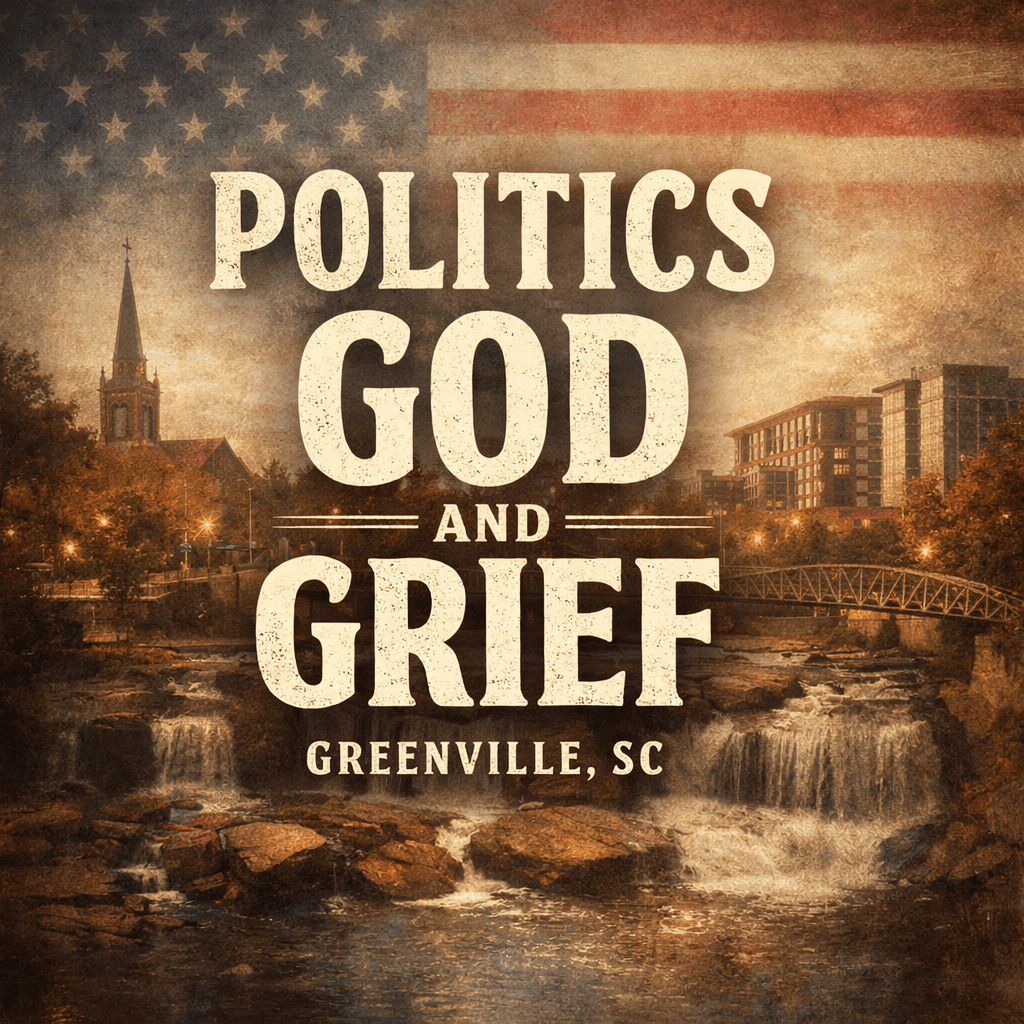
The Reedy River is one of the most visible parts of the city. It cuts through downtown, through Falls Park, past places people walk every day. It’s part of how Greenville presents itself.
And it’s also known, quietly but widely, to be polluted.
Because we can argue all day about climate change—what to call it, how bad it is, what’s going to happen decades from now—but this isn’t decades from now. This is right here.
If we can’t keep something like that clean—something central, something obvious—then it’s hard to believe we’re going to solve anything on a much larger scale.
And I don’t think it’s because people don’t care.
I think it’s because the conversation gets pulled into the same place it always does. It becomes about extremes. About politics. About who’s right and who’s wrong. And once it lands there, it becomes easier to argue than to act.
So we stall.
And in the meantime, the problem doesn’t go anywhere. It just becomes something we get used to.
That’s the part that bothers me most.
Not that we don’t have all the answers—but that we struggle to act on the ones that seem obvious.
There are examples of a different way to approach all of this.
I’ve found myself listening to people like James Talarico, not because I agree with everything he says, but because of how he says it. He speaks from a place of faith, using language that people already trust, and then asks them to think more deeply about how that faith applies. He doesn’t dismiss belief—he leans into it, and then challenges what we do with it.
That kind of voice feels rare.
And maybe that’s part of what I’m grieving.
Not just the issues themselves, but the way we’ve lost the ability—or maybe the willingness—to engage with them honestly. The way we default to positions instead of conversations. The way silence and certainty have replaced curiosity and responsibility.
I don’t have clean answers for any of it.
But I don’t think we can keep avoiding it either.
If hope means anything, I don’t think it’s something we send out and wait on. I think it’s something that asks something back from us. Something that shows up in what we’re willing to say, and what we’re willing to do, even when it’s uncomfortable.
And I’m starting to think that might be the relationship I’ve been looking for all along.
Not one where I ask for answers.
But one where I’m expected to be part of them.
 Frank M. Anderson's Writing
Leave a comment