
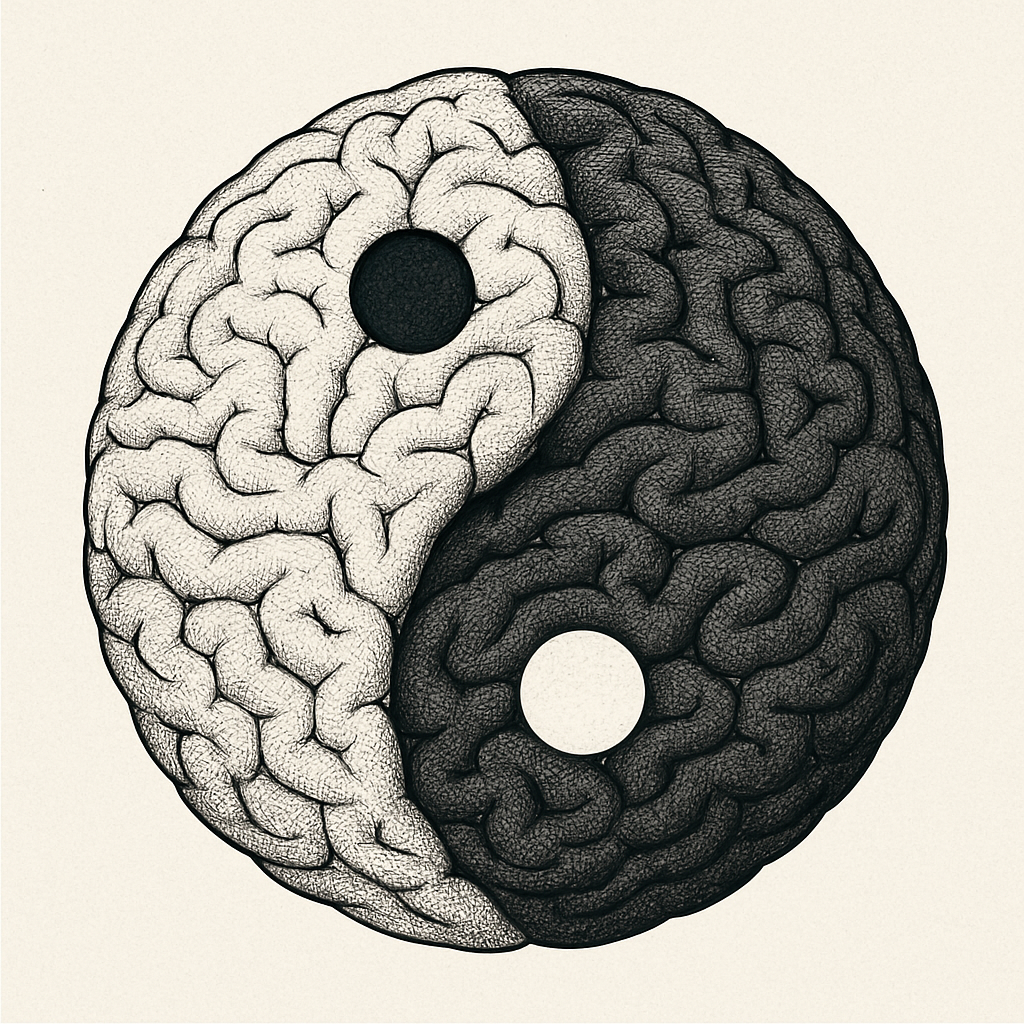
I don’t talk about my bipolar near as much as I should.
Partly out of shame and frustration. Partly out of fear.
People have seen the worst examples of bipolar disorder and there’s a deep, quiet terror that creeps in when I imagine them projecting that onto me. The word alone—bipolar—carries a heavy load. It comes with images of instability, unpredictability, danger. It doesn’t matter how kind or self-aware I try to be; sometimes I can see people flinch internally when I say it out loud.
But much like everything else in life, bipolar is a spectrum—a range of behaviors, brain chemistry, thought patterns, and coping mechanisms. Not everyone presents the same. Not everyone spirals the same. Not everyone heals the same.
Some people with bipolar deal with intense anger and aggression.
That’s not me.
My version tends to turn inward. My rage, my frustration, my confusion—it all gets swallowed and metabolized into self-punishment. I’ll silently berate myself for missing a deadline, for letting someone down, for not being the version of myself I think I should be. I punish myself with silence, isolation, overwork, or simply by disappearing into my own shame spiral.
My pacing as a writer isn’t always consistent. Sometimes my brain is too overstimulated or too scattered to form the words I need. Other times, I’m just emotionally and physically milked dry.
And yet, there are also days where I’m electric. Where the ideas come fast and pure, like a downpour after a long drought. The words don’t just come—they flood. I’ll write for hours, sometimes forgetting to eat or sleep, chasing that impossible thread until it leads somewhere new and strange and beautiful.
That’s the weird paradox of this thing.
There’s a rhythm to it, even if it’s not one I chose.
There are days when my ideas feel like lightning—fast, brilliant, fleeting. I’ll start three projects at once and feel like I’m flying. And then the crash comes. Not always dramatic. Sometimes just a slow fade into static, like a film reel burning out.
Writing, for me, has become more than a habit. It’s a coping mechanism. A companion. A kind of alchemy. I don’t always know what’s real when I’m mid-swing in a cycle, but when I write something down, I can come back to it later and see it for what it was. I can track the patterns. I can recognize the lies my brain tries to sell me. I can catch myself before the spiral takes over.
I worry sometimes that people will read bipolar and immediately assign me a set of behaviors that don’t belong to me. The media loves the spectacle: the manic spending spree, the breakdown on live TV, the violent outburst. That’s not my story. My story is quieter. Harder to dramatize. And maybe harder to see.
But I live it every day. I write through it.
And if you’re reading this—maybe you do too.
 Frank M. Anderson's Writing
Leave a comment