
Why the Issues That Divide Us May Be Hiding the Ones That Matter Most
I’ve been thinking a lot about why politics feels so exhausting right now.
Not just frustrating—but draining in a way that makes you want to step away from it completely. The kind of exhaustion that doesn’t come from caring too much, but from feeling like caring doesn’t actually lead anywhere.
And I don’t think that’s accidental.
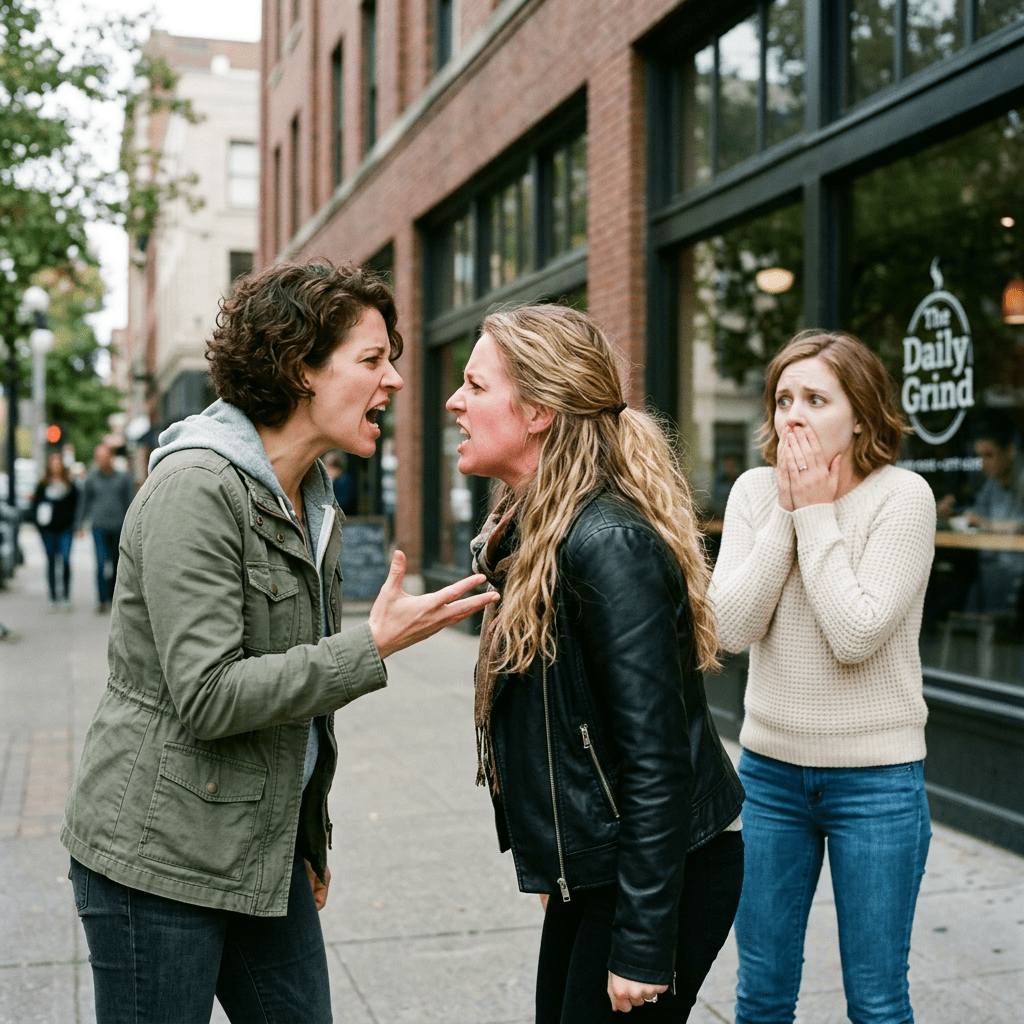
Because the conversations we’re having aren’t always about the things that matter most. They’re about the things that divide us most easily.
Issues that hit identity. Belief. Morality.
Things that are real and important, but also things that are easy to turn into lines in the sand. Easy to argue. Easy to react to. Easy to stay locked inside.
And while we’re focused on those lines, something else is happening underneath.
The bigger issues—the ones that actually affect whether people live or die, whether systems hold or break—don’t get the same attention. They move slower. They’re more complex. They don’t fit neatly into a post or a headline.
So they get pushed to the side.
And over time, that does something to people.
It wears you down. It makes everything feel like noise. It makes it harder to tell what actually matters and what’s just there to keep you engaged.
Eventually, it makes you want to tune out completely.
I see that happening all around me.
People who used to care about politics now avoid it. Not because they’ve stopped believing things matter, but because they don’t feel like they can actually engage with it in a meaningful way anymore. It feels like stepping into a fight that never ends and never changes anything.
So they step back.
And that’s where it gets dangerous.
Because when people step back, the conversation doesn’t get calmer or more thoughtful. It just gets narrower. The loudest voices take up more space. The extremes become more visible. And the middle—the place where most real decisions actually get made—starts to disappear.
That’s not just a communication problem.
It’s a moral one.
Because while we’re arguing about the issues that divide us most easily, the issues that require the most attention are still there. They don’t go away just because we stop looking at them.
People are still struggling. Systems are still failing. Decisions are still being made that affect real lives in real ways.
And when we disengage, we’re not just protecting our peace.
We’re leaving those decisions to happen without us.
A big part of the problem is the way everything gets framed.
Not just what we argue about—but how we’re asked to see it in the first place.
Almost every issue gets pulled into a left versus right dynamic, where the goal isn’t to solve something, but to position yourself against the other side. It becomes less about what we’re actually trying to build, and more about what we’re trying to resist. You’re either for this or against that, and there’s very little space to ask what the outcome is supposed to be beyond winning the argument.
At the same time, a lot of conversations get reduced to identity versus rights. Who is seen, who is protected, who is included, and how that inclusion is understood. These are real and important questions, but they’re often framed in ways that make it feel like one has to come at the expense of the other. Like recognizing someone’s identity somehow threatens someone else’s stability, or protecting rights requires ignoring lived experience.
And then there’s the tension between safety and progress.
Every change carries risk. Every attempt to move forward creates uncertainty. But when that tension gets amplified, it can freeze everything in place. Safety becomes the reason to stop. Progress becomes something to fear. And instead of working through that balance, we end up stuck—arguing about whether change itself is the problem.
None of these tensions are imaginary.
But the way they’re presented pushes us into opposition instead of resolution.
And once we’re locked into those positions, everything else gets harder.
I don’t say any of this as a judgment. I feel that pull too.
There are days where it’s easier to just focus on what’s in front of me—my family, my work, the things I can control—and let everything else fade into the background. There’s a kind of relief in that.
But there’s also a cost.
Because at some point, stepping away from the conversation doesn’t just reduce stress—it reduces responsibility.
And that’s the part I keep coming back to.
Especially when I think about faith.
If faith is real—if it actually means something—then it has to exist in the same world as these problems. It can’t just be something we turn to for comfort while ignoring the things that are uncomfortable.
It has to show up in how we engage with reality.
Not perfectly. Not constantly. But intentionally.
Because the alternative is easier.
We let ourselves get pulled into smaller arguments. We take strong positions on issues that feel immediate and personal. We argue about identity, about language, about the things that are right in front of us.
And those things matter.
But they also have a way of crowding out everything else.
They become the focus, while the bigger, harder, less visible issues fade into the background.
And that’s how you end up in a place where people are deeply engaged… and nothing meaningful changes.
That’s how you end up in a place where people feel strongly… but don’t feel effective.
And eventually, that’s how you end up in a place where people stop paying attention altogether.
I don’t think the answer is to care less.
And I don’t think the answer is to fight harder in the same ways we already are.
I think the answer is to be more honest about what’s actually happening.
To recognize when we’re being pulled into conversations that are designed to keep us reacting instead of thinking. To step back—not to disengage, but to refocus.
To ask harder questions.
What actually matters here?
What is being ignored?
Who is affected if nothing changes?
Those aren’t easy questions.
They don’t lead to quick answers or clean conclusions.
But they move the conversation in a different direction.
And maybe that’s the point.
Because if we’re going to live up to the values we claim to hold—whether those come from faith, from experience, or just from a basic sense of right and wrong—then we can’t just engage with what’s easiest.
We have to stay connected to what’s real.
Even when it’s complicated.
Even when it’s uncomfortable.
Even when it doesn’t fit neatly into a side.
I don’t think we’ve lost our sense of morality.
I think we’ve just lost our focus.
And getting that back might be one of the most important things we can do.

 Frank M. Anderson's Writing
Leave a comment