
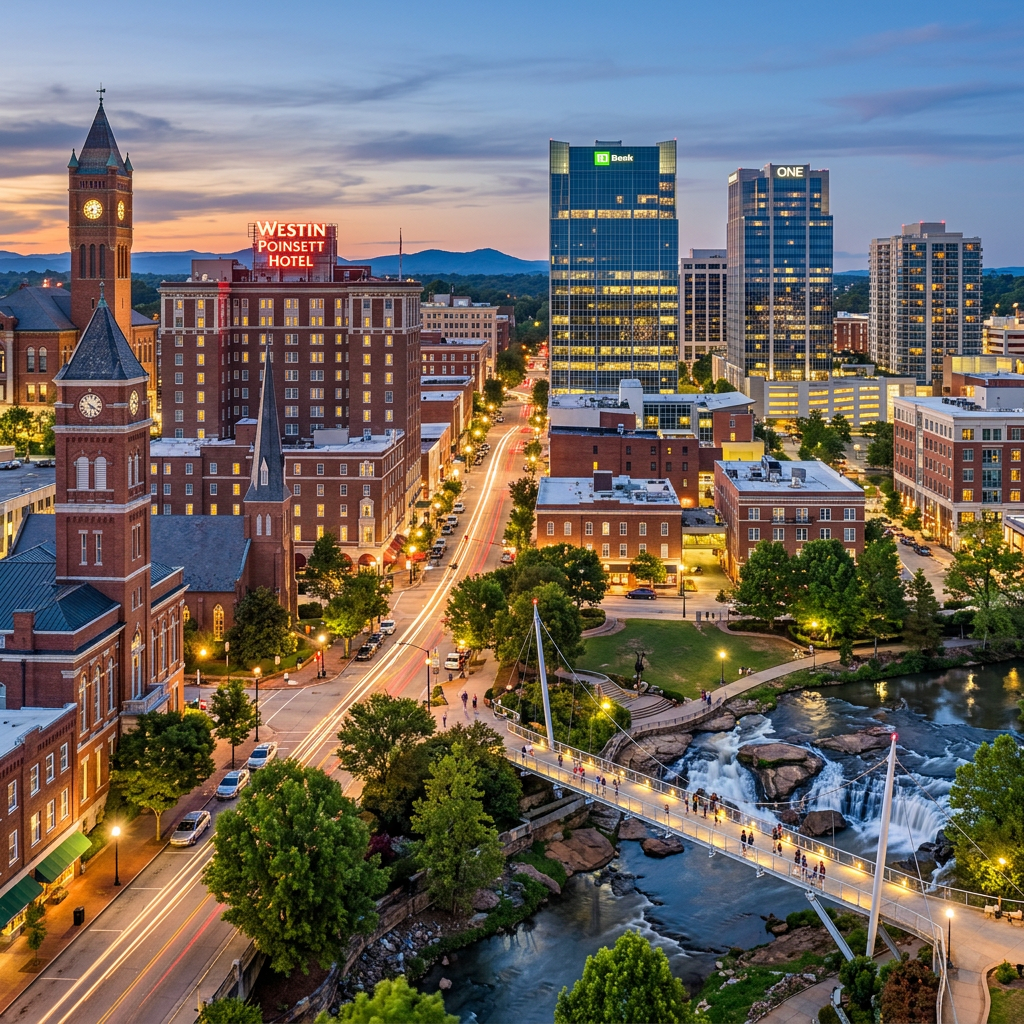
It is an odd thing to worry about a city after the departure of a leader who has been in office so long that many residents barely remember life before him. But that is where Greenville may now find itself.
For nearly three decades, Knox White has been one of the defining faces of modern Greenville. His name is tied to the transformation of downtown, the rebirth of Main Street, the rise of Greenville’s national profile, and the broader sense that this once-overlooked Southern city had figured something out. Whether people supported him politically or not, they have lived inside the era he helped shape.
That makes the question of what comes next more important than many may realize.
This is not fear of change for its own sake. Cities need change. Leaders should not govern forever. New generations deserve their turn. The real concern is more specific: has Greenville built strong enough institutions and a broad enough vision to thrive after Knox White, or has it become too dependent on one long-running style of leadership?
The Knox White Success Story
To deny Knox White’s accomplishments would be unserious.
Modern downtown Greenville is one of the most widely praised urban turnarounds in the South. Falls Park on the Reedy is a genuine civic asset. Main Street is attractive, active, and economically vibrant. The city developed a recognizable identity at a time when many mid-sized cities struggled to stand out. Greenville became a place people visited, moved to, invested in, and talked about positively.
That did not happen by accident.
White represented a style of leadership that many cities would envy: pragmatic, polished, growth-oriented, relatively moderate in tone, and focused on visible civic improvements. While national politics grew uglier, Greenville often projected competence and optimism.
That matters.
It is easy to criticize success once it exists. It is harder to create it in the first place.
The Limits of the Knox Era
But every political era develops blind spots, especially long ones.
The most common criticism of modern Greenville is that it has become too centered on real estate momentum, downtown branding, and project-by-project growth. Put more bluntly: Greenville learned how to build desirable places, but has not always shown the same urgency about building a broadly livable city.
Housing affordability has become a growing concern. Traffic congestion is no longer a minor annoyance but a structural issue. Communities outside the polished core often feel less seen. Many workers who sustain Greenville’s economy increasingly live farther from the prosperity they help create.
The city can feel divided between the Greenville that gets marketed and the Greenville that gets commuted through.
That is not all Knox White’s fault. Growth itself creates pressures. National housing trends matter. State policy matters. County government matters. Markets matter.
But long-serving leaders inevitably become identified not only with successes, but with unresolved problems.
Greenville may have mastered placemaking before fully mastering city-making.
The Fear of Succession
When one figure has dominated civic identity for decades, succession becomes harder.
Who replaces a mayor whose greatest political strength was not ideology but stability? Who inherits a coalition made up of business confidence, moderate voters, civic institutions, and residents broadly satisfied with the city’s trajectory?
There is no obvious heir.
That can be healthy. It can also be risky.
Without a clear successor, Greenville could drift into one of several futures.
Possibility One: Knox White Without Knox White
An establishment continuity candidate emerges. Business-friendly, polished, pro-growth, donor-supported, rhetorically moderate. Someone who promises to keep momentum going.
This may be the most likely path.
It would reassure investors and many residents. But it could also continue the same habits without the personal credibility White spent decades building.
Possibility Two: Reform Greenville
A newer generation candidate runs on affordability, transit, infrastructure, neighborhood equity, and transparency. Someone who accepts Greenville’s gains but argues the next chapter must be broader and fairer.
This would be the most interesting race.
The challenge would be proving reform does not mean anti-growth stagnation.
Possibility Three: Backlash Greenville
Growth fatigue is real. Rising costs are real. Traffic frustration is real. A candidate could channel anger at development, insiders, density, or city hall itself.
This kind of politics can be powerful.
It can also be reactive rather than visionary.
Possibility Four: Fragmented Greenville
No strong coalition forms. Multiple candidates split constituencies. Governance becomes more erratic. The city loses strategic clarity while continuing to grow anyway.
This may be the most dangerous scenario because growth does not pause while politics sorts itself out.
What Should Happen Next
In my view, Greenville does not need a mayor whose only promise is more deals, more ribbon cuttings, and more carefully rendered mixed-use announcements.
It needs a mayor—and broader leadership class—ready to move from an era of beautification to an era of maturation.
That means treating housing affordability as seriously as aesthetics. Treating transportation as more than widening roads after the fact. Working more closely with Greenville County on regional planning. Investing beyond the postcard core. Asking whether workers, teachers, nurses, tradespeople, young families, and retirees can still belong here.
The next leader should understand something simple but profound:
Downtown success was chapter one.
Chapter two is whether the whole region shares in it.
Final Thought
Knox White may one day be remembered as the mayor who helped Greenville become desirable.
The next mayor will be judged on whether Greenville became durable, fair, and functional after that.
That is why a post-Knox White Greenville is worth worrying about.
And worth getting right.

 Frank M. Anderson's Writing
Leave a comment