
The The Simpsons takes place in a fictional town called Springfield.
The name was chosen for a simple reason: there are so many Springfields across the United States that it could feel like anywhere.
In that sense, Greenville isn’t all that different.
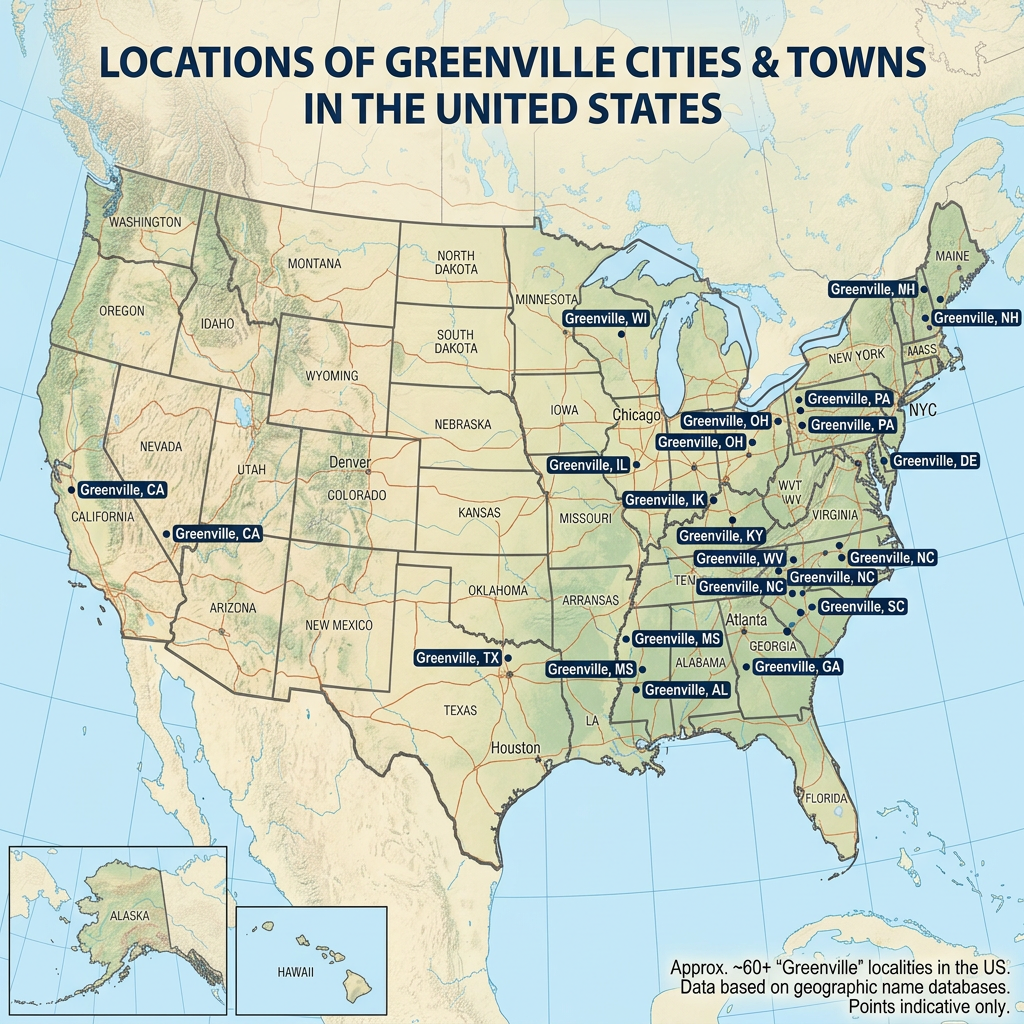
There are Greenvilles in multiple states—North Carolina, Mississippi, Texas, and beyond. The name itself isn’t unique.
And yet, there’s only one Greenville, South Carolina.
Which raises a question that’s harder to answer than it sounds:
What does “Greenville” actually mean here?
For a city with such a polished modern identity, Greenville’s name has surprisingly uncertain origins.
That feels appropriate somehow.
The deeper you dig into Greenville’s history, the more you realize the city was never born in one clean moment. It emerged slowly out of war, land deals, speculation, migration, reinvention, and competing visions of what this place was supposed to become.
Even the question of what to call it carries multiple overlapping stories.
Officially, Greenville County was established in 1786, shortly after the Revolutionary War. South Carolina was reorganizing enormous stretches of newly opened Upcountry land after years of conflict involving Patriots, Loyalists, Cherokee communities, and British forces.
Counties had to be created. Roads mapped. Courts established. Property claims settled.
Frontier territory was rapidly transforming into civic territory.
And somewhere during that process, the name “Greenville” appeared.
But historians still debate exactly why.
One theory is the simplest: the region was named for its landscape. Early travelers described thick forests, rivers, fertile valleys, and rolling foothills dense with chestnut, hickory, pine, and sycamore. Compared to harsher frontier areas, the Upcountry must have felt remarkably green and alive.
Another theory points to Isaac Green, a local mill owner associated with early settlement near the Reedy River.
But the explanation most historians favor is that the county was named after Revolutionary War General Nathanael Greene, whose southern campaign helped wear down British forces during the final years of the war.
Greene became associated with endurance, survival, and eventual victory after a brutal conflict that deeply affected the Upcountry.
What’s interesting is that all three explanations feel believable—because all three reflect something true about Greenville’s identity.
The landscape.
Commerce.
Aspiration.
The story gets even more layered when you realize the settlement itself wasn’t always commonly called Greenville.
For a time in the early 1800s, the growing village around the Reedy River was widely known as Pleasantburg.
And that name feels almost strangely modern.
The foothills of the Upcountry were viewed as healthier, cooler, and more comfortable than the Lowcountry regions closer to the coast. Wealthier South Carolinians often traveled here during the summer to escape heat, mosquitoes, and disease.
The area developed a reputation as a retreat—greener, calmer, and more livable than many parts of the state.
In other words, Greenville was already building part of its modern identity two centuries ago.
Even then, the city was associated with a certain idea:
beauty,
fresh air,
comfort,
and quality of life.
That thread still runs through Greenville today.
You can see it in Falls Park, the Swamp Rabbit Trail, tourism campaigns, “best places to live” lists, and the city’s carefully cultivated image as one of the South’s most desirable places to live and visit.
In some ways, Greenville has been selling the idea of “pleasant living” since the frontier era.
Eventually, “Greenville” became the official and dominant name as the county grew and civic identity standardized.
But Pleasantburg never disappeared completely.
It survives in fragments—Pleasantburg Drive, older church names, historical references, and the memory of an earlier version of the city.
And honestly, that layered identity may be the most Greenville thing imaginable.
Because this city has reinvented itself repeatedly:
frontier settlement,
summer refuge,
mill town,
declining textile center,
revitalized downtown,
tourist destination,
and now a rapidly growing Southern city still trying to decide what it wants to become next.
Every generation seems to create a slightly different version of Greenville—while quietly suggesting it was always meant to be that way.
Final Thought
Maybe that’s why the uncertainty around the name feels right.
“Greenville” doesn’t read like a fixed definition.
It feels like a story.
One shaped by landscape, conflict, ambition, memory, and reinvention—and by the persistent desire to make this place feel pleasant, prosperous, and worth belonging to.
Leave a Reply