
There’s a strange thing happening in South Carolina right now.
On one side, the state is booming. Cranes everywhere. Subdivisions spreading into old fields and forests. Distribution centers. Data centers. Luxury apartments. “Top Places to Move.” “Fastest Growing.” “Business Friendly.” The official story is momentum.
But underneath that polished story, there’s another South Carolina talking.
And recently, someone accidentally handed us a transcript of it.
The South Carolina Forum — a bipartisan civic initiative backed by political operatives, business leaders, strategists, and public figures — has been collecting public submissions from residents across the state about what they think South Carolina’s biggest problems actually are. The result is a massive document: hundreds of pages of raw citizen commentary, complaints, fears, hopes, frustrations, and policy demands.
Reading through it feels less like reading polling data and more like overhearing thousands of conversations at gas stations, school board meetings, coffee shops, church parking lots, HOA fights, hospital waiting rooms, and family dinners.
And the strangest part?
Despite how divided we’re constantly told we are, South Carolinians actually agree on a lot.
Not necessarily on solutions. But on what feels broken.
Again and again, the same themes appear:
roads,
infrastructure,
housing costs,
healthcare,
education,
overdevelopment,
government distrust,
and the sense that growth is happening to people rather than for them.
That matters.
Because if you strip away the partisan language surrounding many of the submissions, a deeper pattern emerges: South Carolina is experiencing a crisis of coordination.
People feel like systems are no longer talking to each other.
Developers build faster than roads can handle. Schools struggle to absorb growth. Hospitals lag behind population increases. Housing prices rise faster than wages. Rural areas feel abandoned while urban areas feel overwhelmed. Longtime residents feel culturally displaced while newcomers feel confused about why basic infrastructure doesn’t match the state’s explosive growth.
That tension is especially visible here in the Upstate.
If you’ve spent any time driving Woodruff Road, Laurens Road, Wade Hampton, Pleasantburg, or parts of Greenville County lately, you already know this isn’t theoretical. The state’s physical systems are straining in real time.
And the Forum responses reflect that over and over:
- “Infrastructure has not kept pace with development.”
- “Roads are decades behind.”
- “Too much development and not enough roads.”
- “Growth is exposing gaps.”
- “We are overdeveloping natural woodlands.”
- “Housing is slipping out of reach.”
- “Traffic is horrific and only getting worse.”
What’s fascinating is that these concerns come from people across ideological lines.
Some respondents blame Republican leadership. Others blame Democrats. Some blame overregulation. Others blame corporate influence and deregulation. Some want lower taxes. Others want expanded public services.
But beneath all of it is a shared emotional reality:
People no longer trust that growth automatically equals improvement.
That may be the single biggest shift hiding inside this document.
For years, South Carolina’s political identity has revolved around attraction:
more business,
more people,
more investment,
more construction,
more expansion.
And for a long time, growth itself was treated as proof of success.
But now you can feel the hesitation creeping in.
Not anti-growth exactly.
More like:
“Wait. What are we actually building?”
That’s an important distinction.
Because this isn’t just a policy conversation. It’s a cultural one.
What kind of place is South Carolina becoming?
The responses reveal a state struggling to reconcile multiple identities at once:
- old South vs new South,
- rural vs urban,
- growth vs preservation,
- freedom vs regulation,
- local identity vs national political tribalism.
And perhaps most revealingly, many respondents seem exhausted by performative politics entirely.
One of the most repeated sentiments throughout the dataset is frustration with “culture war distractions” while roads, schools, healthcare, and housing worsen around them.
That doesn’t mean cultural issues are unimportant. Clearly they matter deeply to many people. The dataset includes fierce disagreements over abortion, LGBTQ rights, immigration, religion, cannabis, voting laws, and public education.
But even many people engaged in those debates still circle back to a broader frustration:
Why does it feel like nobody is governing the actual physical state?
That line could practically summarize modern South Carolina.
Because beneath the branding campaigns and ribbon cuttings, there’s a growing sense that the state is improvising its future instead of designing it.
And maybe that’s what makes this dataset so compelling.
It isn’t polished.
It isn’t filtered through media narratives.
It’s messy, contradictory, emotional, repetitive, angry, hopeful, paranoid, idealistic, practical, and deeply human.
In other words:
it sounds like South Carolina.
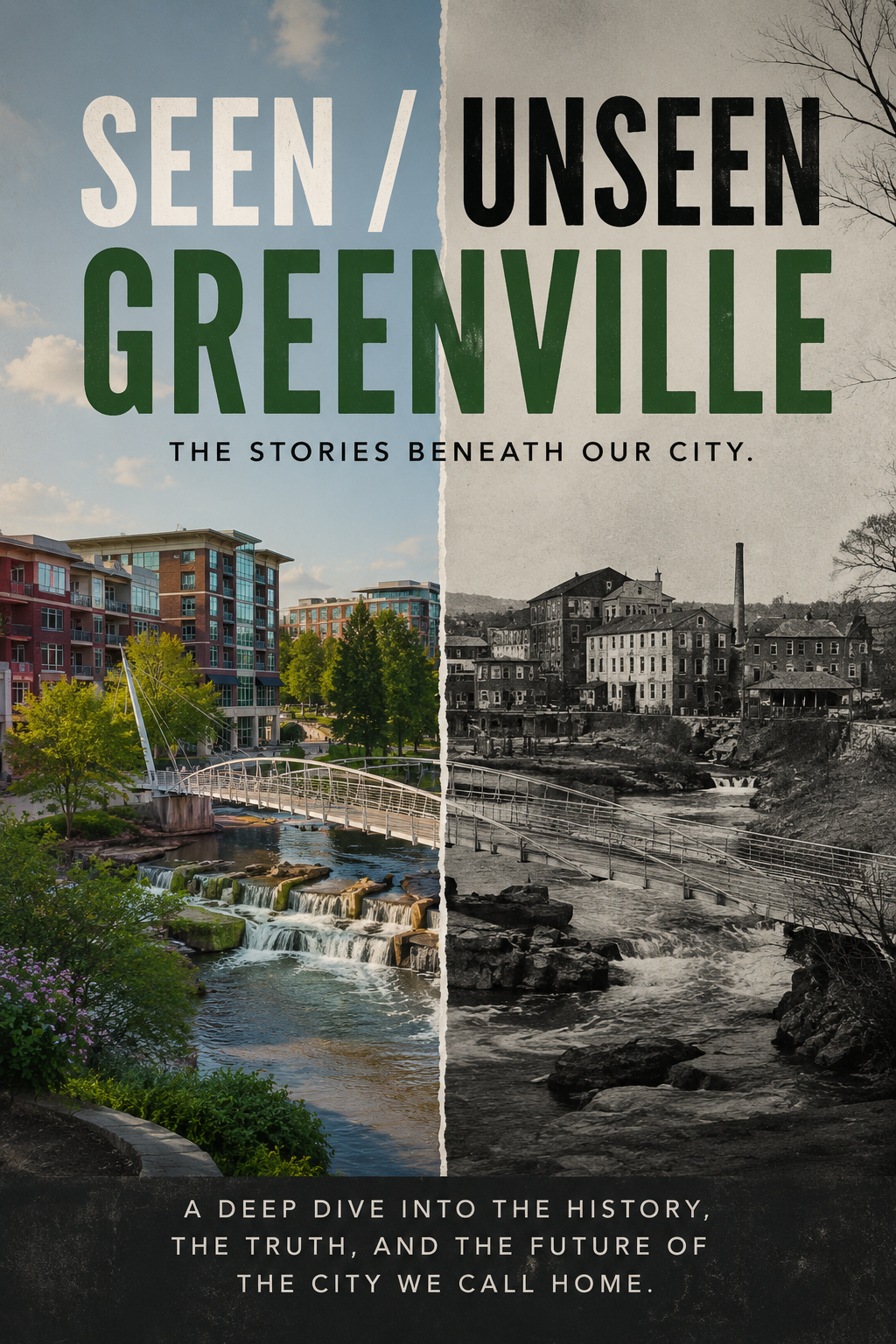
And maybe the most Seen / Unseen thing about all of this is that the state’s biggest divide may not actually be left vs right.
It may be between the official story South Carolina tells about itself —
and the lived experience people are increasingly having inside it.
Leave a Reply