
A while back, I became involved in a project called Pleasant Roast — a proposed drive-thru coffee concept planned for a busy Greenville corridor. On the surface, it seemed simple enough: take an underused property, create a practical local business, and build something people would actually use.
But the deeper we got into the process, the more obvious it became that we weren’t just proposing a coffee shop.
We had accidentally stepped directly into one of the biggest debates happening in Greenville right now:
What kind of city are we trying to build?
That same tension recently showed up again in the Buncombe & Butler debate, where many people believed City Council had approved a drive-thru project. In reality, Council voted on zoning classifications, while the drive-thru itself still requires separate approvals through another process.
That distinction may sound technical, but it reveals something important:
modern city development happens through layers of boards, planning policies, zoning categories, corridor studies, long-term growth plans, exceptions, traffic concerns, and competing philosophies about what Greenville should become.
And underneath all of that are two very real perspectives.
One side sees Greenville’s future in walkability, density, mixed-use development, bike infrastructure, transit investment, and reducing dependence on cars.
The other side looks at Greenville as it exists today:
a growing Southern city where people still drive everywhere, businesses depend on accessibility, and many commercial corridors were designed around traffic flow long before today’s planning goals existed.
Neither side is entirely wrong.
That’s what makes these conversations so emotionally charged — and so important.
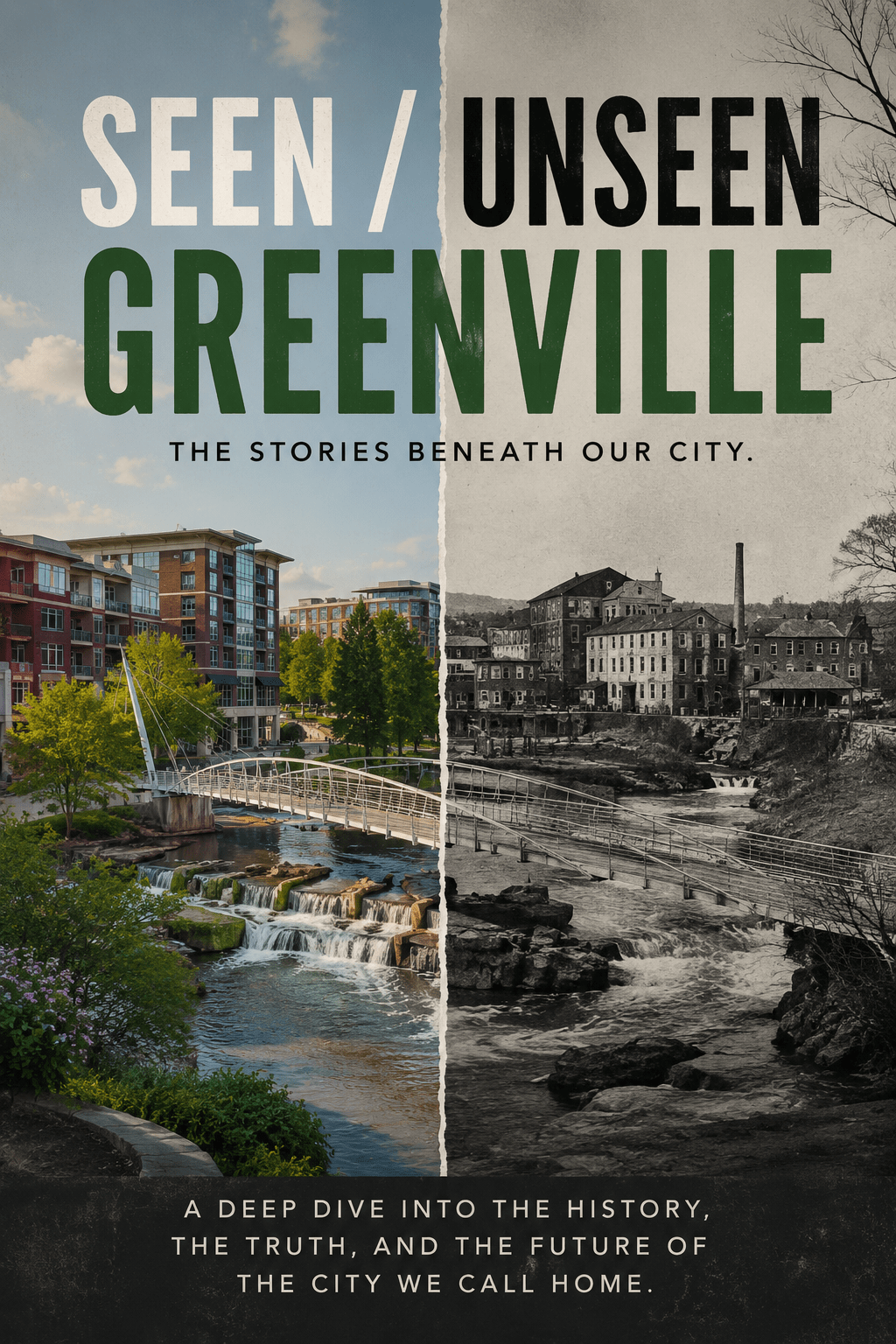
Seen / Unseen Greenville began as an attempt to look beneath the surface of those debates. Not to pick easy villains. Not to scream at city planners or developers. But to understand how history, policy, economics, infrastructure, and identity all collide in real places with real consequences.
Because cities do not evolve accidentally.
Every road, zoning decision, redevelopment project, preserved space, demolished building, tax incentive, and planning document shapes the future version of the place we live.
And most people never realize how much of that process happens quietly around them until a project appears near their neighborhood and suddenly everyone is angry.
So here’s the real takeaway:
Pay attention.
Go to meetings.
Read proposals.
Learn how zoning works.
Listen to planners.
Listen to business owners.
Listen to residents.
Ask questions.
Stay curious.
Because if ordinary people are not involved in shaping their cities, the decisions will still get made.
They’ll just get made without them.
— Seen / Unseen Greenville
 Frank M. Anderson's Writing
Leave a comment