
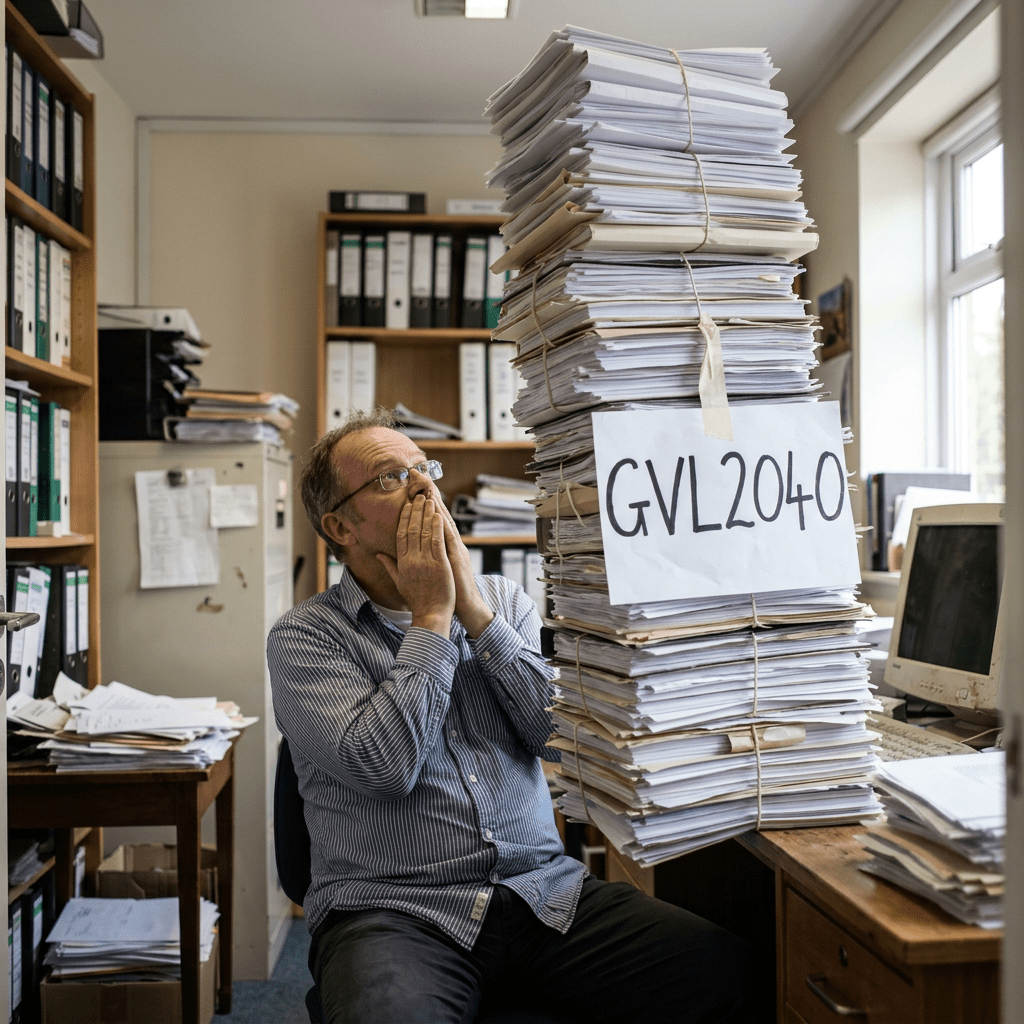
Most people in Greenville haven’t read GVL2040.
That’s not really a knock on anyone. It’s a long-term planning document, not exactly light reading. But it is one of the most important things shaping what Greenville becomes over the next 15–20 years, whether people realize it or not.
GVL2040 is the City of Greenville’s comprehensive plan for growth. It lays out how the city wants to develop—where density should go, how transportation should evolve, what kind of housing should be encouraged, how green space should be preserved, and what kind of place Greenville is trying to become.
And on paper, a lot of it is hard to argue with.
The plan emphasizes smarter growth instead of endless sprawl. It talks about more walkability, more bike infrastructure, more connected neighborhoods, better use of land, and a wider range of housing options. It recognizes that Greenville is growing and tries to steer that growth instead of letting it happen randomly.
That’s a good thing. A lot of cities never even get that far.
But plans describe intentions. Cities reveal priorities.
And when you look at Greenville not just through the language of the plan, but through what’s actually happening on the ground, a gap starts to appear.
Greenville has become very good at building the visible parts of progress. We know how to create attractive parks, improve downtown spaces, expand trails, and develop areas that photograph well and feel modern. The city looks better than it did twenty years ago. In many ways, it feels better too.
But the harder parts of the plan—the parts that deal with affordability, accessibility, and who gets to remain in the city—are moving more slowly.
Housing is the clearest example. GVL2040 talks about the need for a wider range of housing and more affordability. And to be fair, there have been efforts in that direction. But the scale of those efforts hasn’t matched the scale of growth pressure. Prices have risen faster than solutions have been built. For many people, especially working families, the question isn’t whether Greenville is improving—it’s whether they can still afford to stay here as it does.
You see a similar gap in how the city approaches walkability and bike infrastructure.
Greenville has clearly committed to becoming more walkable and bike-friendly, and that’s a positive direction. The Swamp Rabbit Trail, downtown improvements, and newer corridor designs all show real progress.
But the experience still feels uneven. Walkability often exists in pockets rather than as a connected system. You can walk comfortably in certain areas, but not reliably between them. You can bike recreationally, but not always practically.
And in some cases, the implementation feels rigid in ways that don’t always make sense.
Property owners and small businesses can find themselves redesigning projects multiple times to meet specific requirements—bike racks, layout details, technical standards that may or may not meaningfully improve how the space actually functions. At that point, it starts to feel less like thoughtful planning and more like checking boxes.
That kind of rigidity creates another issue that doesn’t get talked about enough.
Larger companies—especially national chains—are often better equipped to navigate systems like this. They have teams, experience, and capital to absorb delays and redesigns. They know how to work within structured planning environments.
Smaller, locally developed businesses don’t always have that same margin.
I saw that firsthand with Pleasant Roast. What started as a concept designed specifically for Greenville ran into repeated friction—not because the goals were wrong, but because the system didn’t leave much room for flexibility. Reasonable adjustments became difficult. Time stretched. Costs grew.
That kind of friction doesn’t usually stop large operators. It filters out smaller ones.
Greenville doesn’t have to intentionally favor big businesses for big businesses to win. The structure itself can create that outcome.
The same kind of tension shows up on a larger scale with the city’s major roads.
GVL2040 imagines corridors like Laurens Road and Pleasantburg Drive evolving into more connected, mixed-use environments over time. That vision makes sense. But right now, those roads still define how much of Greenville actually functions—car-heavy, difficult to navigate on foot, and controlled in part by forces beyond the city’s direct authority.
So you end up with a forward-looking plan sitting on top of a very car-dependent reality. The vision is there, but the transformation is slow, complicated, and uncertain.
And that gets to the heart of the issue.
GVL2040 is not a bad plan. In many ways, it’s a good one.
But like most plans, it reflects who has the time, access, and ability to participate in shaping it. Planning processes tend to amplify the voices of those who can show up consistently—homeowners, professionals, people already somewhat established in the system.
That doesn’t make the plan dishonest. But it can make it incomplete.
Because the people most affected by rising costs, long commutes, and economic pressure are often the least able to influence how these systems evolve.
So what you end up with is a city that is becoming more attractive, more intentional, and more structured—but not always more accessible.
And that gap matters.
Because over time, a city can become easier to enjoy and harder to live in.
None of this means Greenville should stop planning. It means it needs to adjust how it applies that planning.
The goals in GVL2040 are often right. Walkability, better land use, connected growth—those are all worth pursuing. But the execution needs more flexibility and more room for judgment.
Not every project should be forced into the same mold. A small local business shouldn’t be navigating the same level of rigidity as a national chain with an entire development team. If a project meets the spirit of the plan, it shouldn’t be blocked by technicalities that don’t meaningfully improve the outcome.
Planning should aim for better results, not just cleaner compliance.
Because the system we build determines who succeeds within it.
And right now, Greenville is building a system that works very well for those already equipped to navigate it.
That’s not a failure. But it is a choice.
Greenville is becoming a better-looking city. That part is clear.
What’s less clear is whether it’s becoming a more livable one for the full range of people who call it home.
If the gap between those two continues to widen, the outcome won’t be surprising. It will simply mean that more people who helped shape Greenville will no longer be able to stay in it.
And that’s not a planning problem.
That’s a priority problem.

 Frank M. Anderson's Writing
Leave a comment